Why Below-Grade Water Damage Needs Specialists
Submersible Pumps for Standing Water
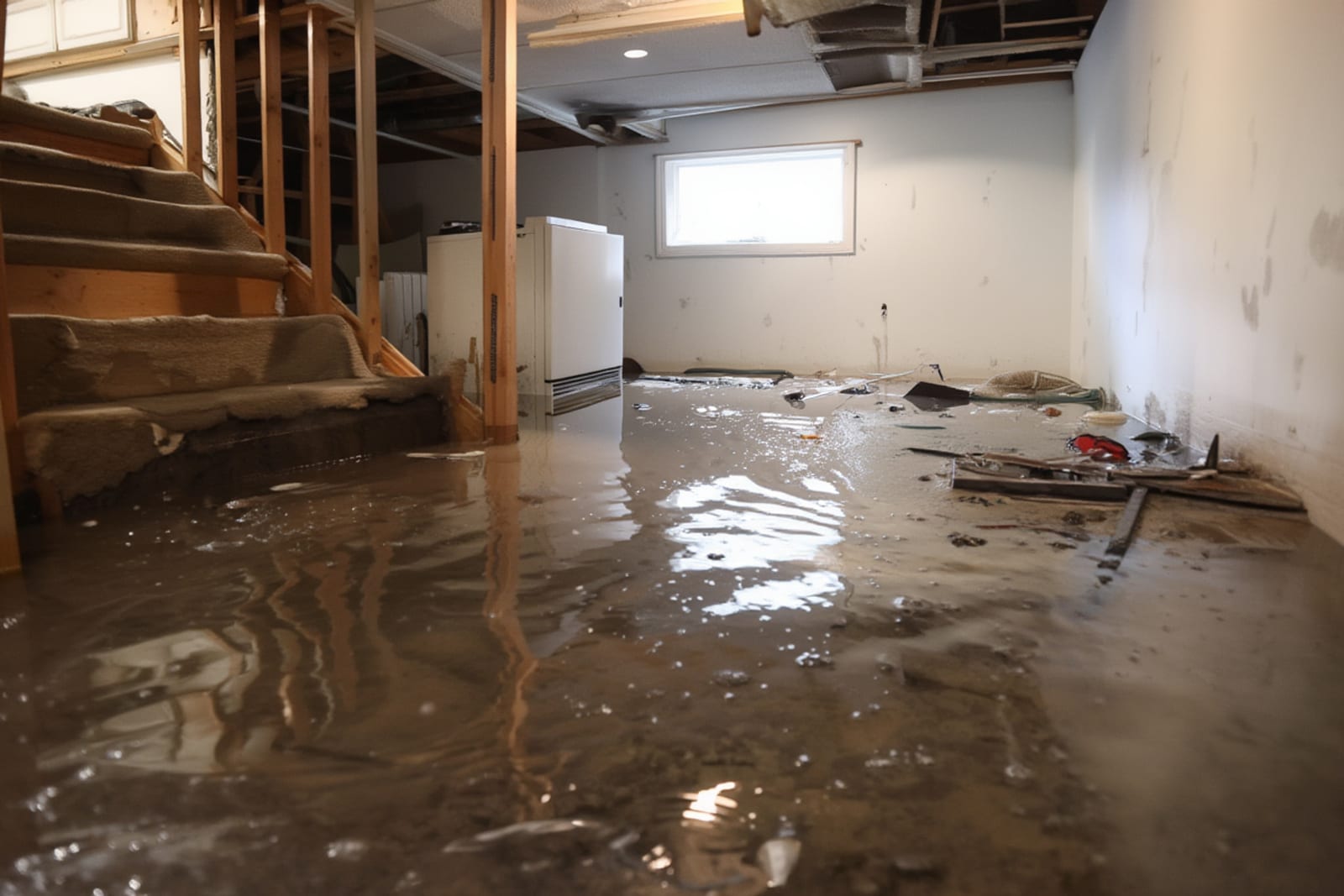
Below-grade spaces trap water with nowhere to drain. We deploy submersible pumps sized to the volume — extracting hundreds of gallons quickly before saturation reaches framing and stored contents.
Concrete-Specific Drying
Concrete absorbs and holds moisture far longer than drywall or wood. We use desiccant dehumidifiers and calibrated air movement to pull moisture from slabs and block walls — verified with concrete moisture meters.
Mold Prevention in Enclosed Spaces
Limited airflow and high baseline humidity make basements prime mold territory. We apply EPA-registered antimicrobials and monitor conditions throughout drying — stopping mold before it establishes.
Below-Grade Insurance Documentation
Below-grade events require detailed cause documentation — especially since coverage hinges on whether the source was a plumbing failure, sewage backup, or seepage. We provide complete moisture readings and photo records for your carrier.
Common Causes of Basement Water Damage in Austin
While basements are less common in Austin than in northern cities, homes with below-grade spaces face specific water damage risks tied to Central Texas conditions:
Plumbing Failures From Above
Burst supply lines, water heater ruptures, and appliance leaks on upper floors follow gravity directly into the lowest level of the home. A second-floor supply line failure can send hundreds of gallons into a basement before someone notices.
Sewage Backup
When municipal sewer lines are overwhelmed during heavy Austin rain events, sewage can back up through basement floor drains and toilet connections. This is classified as Category 3 (black water) contamination and requires specialized cleanup procedures. Our water damage cleanup team is equipped for all contamination categories.
Foundation Seepage
Austin sits on expansive clay soil — primarily the Taylor Marl and Eagle Ford formations. This clay absorbs water and swells, creating hydrostatic pressure against basement walls and floor slabs. Water enters through cracks, cold joints, and porous concrete. After extended dry periods followed by heavy rain, clay expansion can be dramatic.
Poor Exterior Drainage
Grading that slopes toward the foundation, clogged or disconnected downspouts, and inadequate French drain systems allow surface water to pool against basement walls. This is the most preventable cause of basement water damage.
Sump Pump Failure
Homes with basement sump systems depend on them during wet periods. Power outages, mechanical failure, or a pump that cannot keep up with high-volume water infiltration result in standing water.
Basement Flooding vs. Seepage: Different Problems, Different Solutions
Understanding the difference between flooding and seepage matters because the cleanup approach, timeline, and insurance implications are different.
Flooding involves a sudden, significant volume of water entering the space — standing water that is visible and measurable. A burst pipe, failed water heater, or sewage backup are flooding events. They require emergency extraction, rapid containment, and immediate structural drying. Flooding from internal plumbing is typically covered by homeowner's insurance.
Seepage is the gradual movement of water through foundation walls or the slab, often leaving damp spots, mineral deposits (efflorescence), or a perpetually humid environment without visible standing water. Seepage is a chronic condition related to soil moisture, drainage, and foundation integrity. It requires different corrective measures — exterior waterproofing, drainage improvement, or interior drainage systems — and is typically not covered by homeowner's insurance.
During our assessment, we determine which type of water intrusion has occurred. This distinction affects the cleanup protocol, the documentation approach, and the recommendations we make for preventing recurrence.
Water in Your Basement? Call for Immediate Extraction.
We extract standing water, dry below-grade structures to verified standards, and document everything for your insurance.
The Basement Cleanup Process
Basement water damage cleanup follows a specific sequence, adapted for the unique challenges of below-grade spaces:
Safety Evaluation
Before entering, we assess for electrical hazards (submerged outlets, panel boxes), structural compromise, and contamination risk. If the water involves sewage or unknown contamination, we establish appropriate PPE requirements and containment protocols.
Water Extraction
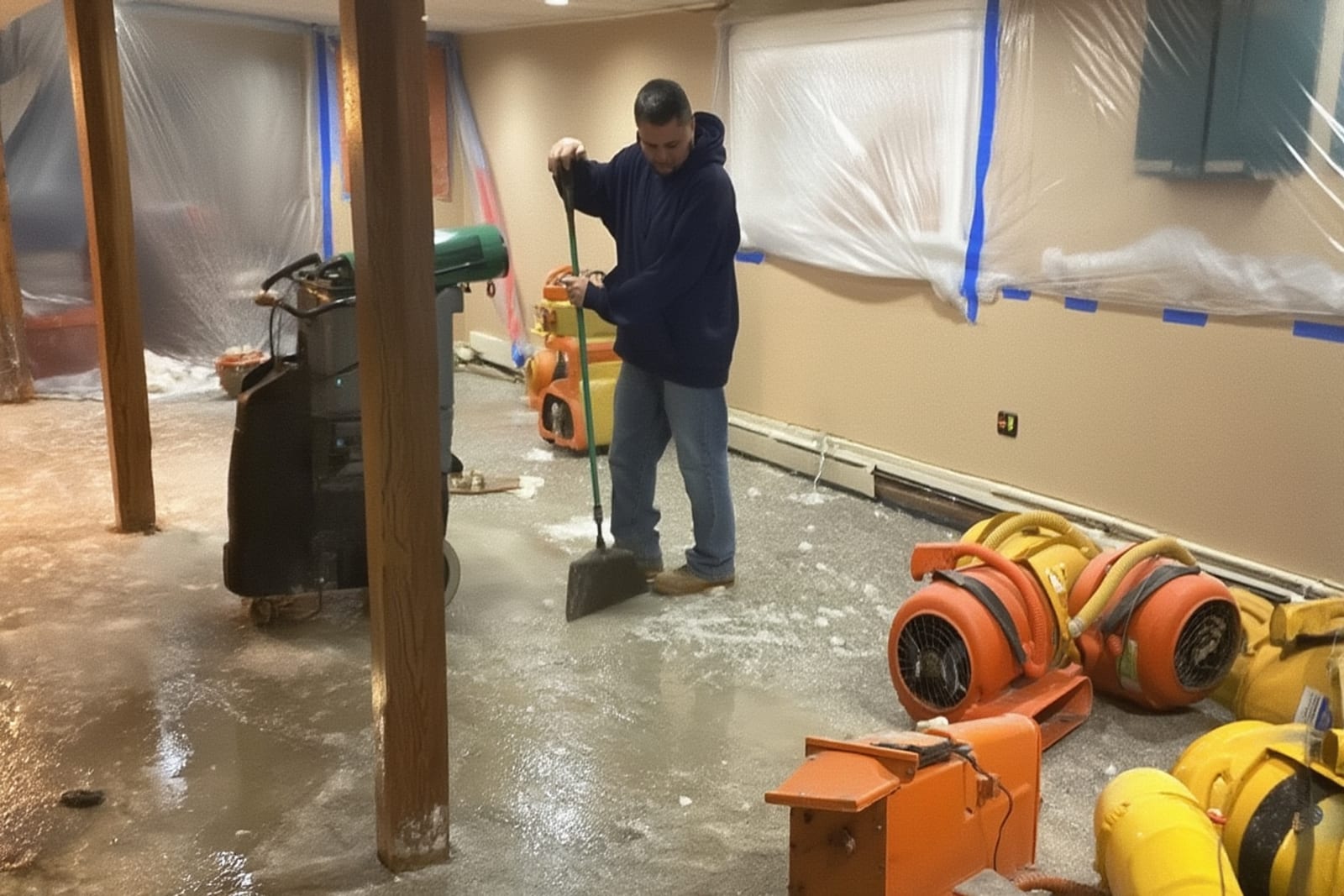
Truck-mounted pumps handle high-volume extraction for significant standing water. Portable submersible pumps reach areas that truck hoses cannot. Weighted extractors remove water from carpet and padding. For basements with concrete floors, squeegee extractors push remaining water to collection points for pump removal.
Contamination Assessment
We classify the water category: Category 1 (clean — supply line break), Category 2 (grey — appliance discharge), or Category 3 (black — sewage, ground surface water). The category determines cleaning and antimicrobial protocols. Sewage-contaminated basements require specific disinfection steps that clean-water events do not.
Debris Removal & Content Evaluation
Saturated materials that cannot be salvaged — carpet padding, damaged drywall, insulation — are removed. Salvageable items are relocated to a dry area for separate drying. We document all items and materials for your insurance records.
Antimicrobial Treatment
All affected surfaces are treated with EPA-registered antimicrobial agents appropriate for the contamination category. For Category 3 events, this includes fogging enclosed areas to reach surfaces that may not be directly accessible.
Structural Drying Setup
Air movers and LGR dehumidifiers are positioned for the specific basement layout. Concrete walls and floors dry differently than wood-framed structures — they hold moisture deeper and release it more slowly, requiring extended drying times and different equipment positioning.
Drying Basement Walls and Concrete Floors
Concrete is the dominant material in most Austin basements, and it presents unique drying challenges. Concrete is porous — it absorbs water readily and releases it very slowly compared to wood or drywall.
Concrete floor drying requires air movers positioned to create high-velocity airflow across the slab surface, combined with dehumidifiers operating continuously. We monitor moisture levels in the concrete using non-destructive moisture meters (the Tramex CME4 is our primary tool for concrete assessment). Target moisture content depends on what flooring will be installed afterward — hardwood and vinyl require lower slab moisture than tile.
Concrete block walls present additional challenges because the hollow cores trap moisture that evaporates slowly. We position air movers to direct airflow across the wall surface and may use wall cavity drying systems to circulate air through block cores when accessible.
Finished basement walls — framed with studs, insulated, and covered with drywall — often need partial or complete demolition for effective drying. Water trapped between the concrete foundation wall and the interior finish wall cannot be dried from either side without access. We remove the lower section of drywall (typically 2 to 4 feet above the water line) to expose the cavity, dry the framing and concrete, and then rebuild. This is a known part of the process, not a surprise, and we explain it during the initial assessment.
Basement drying in Austin typically takes 3 to 7 days for concrete surfaces, and potentially longer during humid summer months when ambient moisture slows the process. We continue monitoring and adjusting equipment until verified dry readings are achieved at every measurement point.
Mold Risk in Basements and Crawl Spaces
Below-grade spaces are inherently high-risk for mold growth after water damage. Several factors combine to create ideal mold conditions:
- Limited ventilation. Basements have fewer windows and less natural air circulation than above-grade rooms. Stagnant air allows humidity to accumulate and prevents natural drying.
- Higher baseline humidity. Even without a water event, basements tend to be more humid than upper floors due to contact with soil moisture through the foundation. Adding a water damage event on top of already-elevated humidity accelerates mold colonization.
- Organic materials. Finished basements contain drywall paper, carpet, wood framing, stored cardboard and paper goods, and other mold food sources. Unfinished basements with exposed wood framing and dust accumulation are also vulnerable.
- Cool surfaces. Basement walls and floors are cooler than ambient air, creating condensation potential — particularly in Austin summers when warm, humid outdoor air meets cool basement surfaces.
After any basement water event, we monitor for mold during the drying process. If we detect mold developing, we address it immediately as part of the cleanup rather than waiting for it to become established. Post-drying, we recommend maintaining basement humidity below 60 percent with a properly sized dehumidifier.
What Basement Items Can Be Saved?
The salvageability of basement contents depends on the water category and how long items were submerged:
Usually salvageable:
- Hard-surface items (metal shelving, glass, plastic storage bins) — clean and disinfect
- Solid wood furniture — dry slowly to prevent cracking; treat for mold if present
- Clothing and washable textiles — launder in hot water with antimicrobial detergent
- Electronics (once fully dried) — have them evaluated by a technician before powering on
Usually not salvageable:
- Particleboard and MDF furniture — swells and delaminates irreversibly
- Books and paper documents exposed to contaminated water
- Carpet padding — absorbs water completely and cannot be effectively cleaned
- Upholstered furniture and mattresses exposed to Category 2 or 3 water
- Any porous item exposed to sewage (Category 3) — contamination cannot be fully removed
We help you evaluate which items can be saved and document the losses for your insurance claim. When in doubt about a specific item, we err on the side of safety — particularly with items exposed to contaminated water.
Frequently Asked Questions
Basement Water Damage Cleanup — Service Areas
We provide basement water damage cleanup throughout the greater Austin metro area, including: Round Rock · Cedar Park · Georgetown · Pflugerville · Kyle · Buda · San Marcos · Leander · Lakeway. Contact us for service in your area.


