Why Professional Black Mold Removal Matters
Sealed Containment
6-mil polyethylene barriers and negative air pressure prevent spores from spreading to unaffected rooms during removal.
HEPA Filtration
Air scrubbers with true HEPA filters run continuously, capturing particles down to 0.3 microns — smaller than any mold spore.
Species Identification
Lab testing confirms whether you have Stachybotrys or a less harmful species. Your actual risk level, not guesswork.
Post-Remediation Clearance
Independent laboratory air sampling verifies spore counts returned to normal before we release the containment zone.
What Is Black Mold? (Stachybotrys vs. Other Dark Molds)
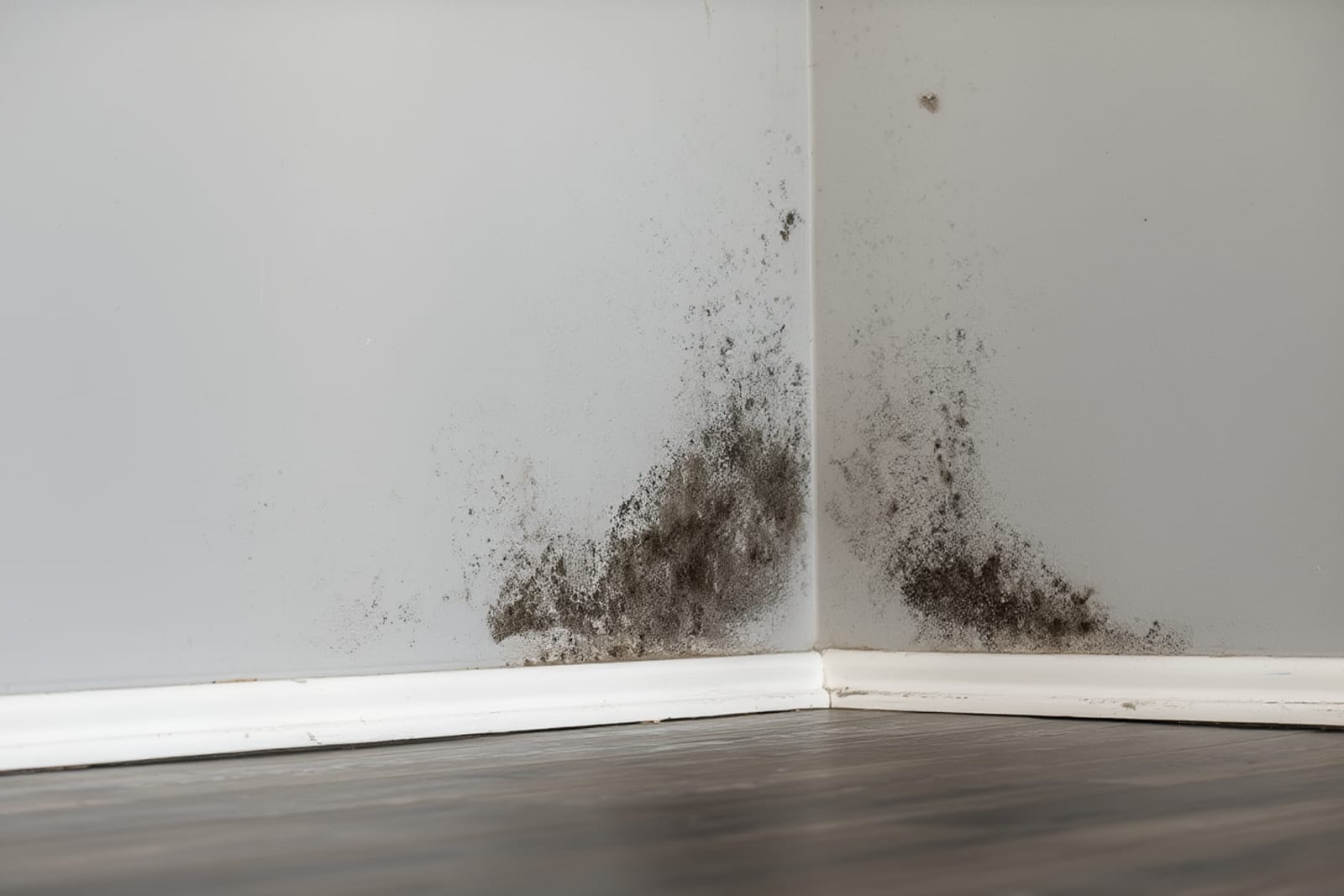
The term "black mold" usually refers to Stachybotrys chartarum, a slow-growing mold that produces mycotoxins — toxic compounds that can cause health effects with sustained exposure. However, many common household molds are also dark-colored. The critical point: you cannot identify mold species by color alone. Only laboratory analysis can confirm what you are dealing with. A professional mold inspection includes this testing.
Stachybotrys chartarum
Dark greenish-black with a slimy or wet texture when actively growing. Produces mycotoxins that can cause respiratory issues, headaches, and fatigue with prolonged exposure. Requires sustained high moisture.
Cladosporium
One of the most common indoor molds. Often dark olive-green to black. Does not produce the same mycotoxins as Stachybotrys, though it can trigger allergic reactions and respiratory irritation in sensitive individuals.
Aspergillus niger
Appears jet black and is frequently mistaken for Stachybotrys. Common in damp environments. Can cause respiratory irritation but does not produce the same mycotoxins. Lab testing is the only way to distinguish it.
Alternaria
Appears dark brown to black. Commonly found in damp areas around showers, under sinks, and near leaking windows. Can trigger allergic reactions but is generally less concerning than Stachybotrys.
Is Black Mold Really More Dangerous?
Stachybotrys does warrant more caution than most household molds, but the risk is often overstated by companies trying to create urgency. Here is what the research actually shows:
- Mycotoxin exposure from Stachybotrys can cause respiratory symptoms, headaches, fatigue, and skin irritation. The risk is highest with prolonged exposure in enclosed spaces with poor ventilation.
- Vulnerable populations — infants, the elderly, people with asthma, and immunocompromised individuals — face greater risk from any mold exposure, not just Stachybotrys.
- The CDC and EPA do not classify Stachybotrys as uniquely toxic compared to all other molds. Their guidance is that all significant indoor mold growth should be addressed, regardless of species.
- Quantity matters more than species. A small patch of Stachybotrys in an accessible area poses less risk than a large colony of any mold hidden inside wall cavities or HVAC ductwork.
Our approach is straightforward: we test to confirm what you are dealing with, explain the actual risk level for your specific situation, and then address the problem using appropriate containment and remediation methods. No scare tactics, no manufactured urgency.
Suspect Black Mold? Get a Professional Assessment.
We test to confirm the species, explain your actual risk level, and provide a written remediation scope. No scare tactics.
How Black Mold Develops After Water Damage
Stachybotrys needs three conditions to grow: sustained moisture, an organic food source, and time. This is why it almost always follows water damage rather than appearing spontaneously.
In Austin homes, the most common scenarios that lead to black mold include:
- Slow plumbing leaks behind walls or under sinks that go unnoticed for weeks or months. The persistent moisture saturates drywall paper — one of Stachybotrys's preferred food sources.
- Improperly dried water damage. If a previous water event was cleaned up visually but not dried to industry standards, trapped moisture in wall cavities or subfloor provides the conditions Stachybotrys needs. This is why proper structural drying matters.
- Condensation issues. Austin's humidity, combined with air conditioning, can create condensation on cold surfaces inside wall cavities — particularly on exterior walls and around poorly insulated ductwork.
- Appliance failures. Refrigerator water lines, washing machine hoses, and water heater leaks that go undetected create ideal Stachybotrys conditions.
Stachybotrys is a slow colonizer. It typically takes 1 to 2 weeks of sustained moisture for visible growth to appear, and established colonies may have been growing for weeks or months before you notice them. This is actually useful information — it means the moisture source has been active for some time and should be identifiable.
Can You Remove Black Mold Yourself? (DIY vs. Professional)
The EPA's general guidance is that homeowners can address mold on hard surfaces in areas smaller than 10 square feet (roughly a 3-by-3-foot patch). For Stachybotrys specifically, even small areas benefit from professional handling due to the mycotoxin risk during disturbance.
Here is why DIY black mold removal often fails or makes things worse:
- Spore dispersal. Disturbing Stachybotrys without containment releases mycotoxin-laden spores into the air, potentially contaminating other rooms through your HVAC system.
- Surface-only treatment. Bleach and consumer mold products kill surface mold but do not address growth within porous materials like drywall and wood. The mold regrows from the root system (hyphae) within weeks.
- Hidden extent. Visible mold is often the edge of a larger colony behind the wall. Cutting into drywall without containment and HEPA filtration spreads contamination.
- No source correction. Cleaning mold without finding and fixing the moisture source guarantees recurrence.
If you see what appears to be black mold, the safest first step is to avoid disturbing it, improve ventilation in the area, and schedule a professional mold inspection to determine the species, extent, and moisture source.
The Professional Black Mold Removal Process
Our mold remediation process for confirmed Stachybotrys follows IICRC S520 standards and includes additional safety measures beyond what standard mold remediation requires:
Assessment and Testing
We inspect the affected area and surrounding spaces, take air and surface samples for laboratory analysis, and use moisture meters and thermal imaging to map the full extent of contamination — including behind walls and above ceilings.
Containment Setup
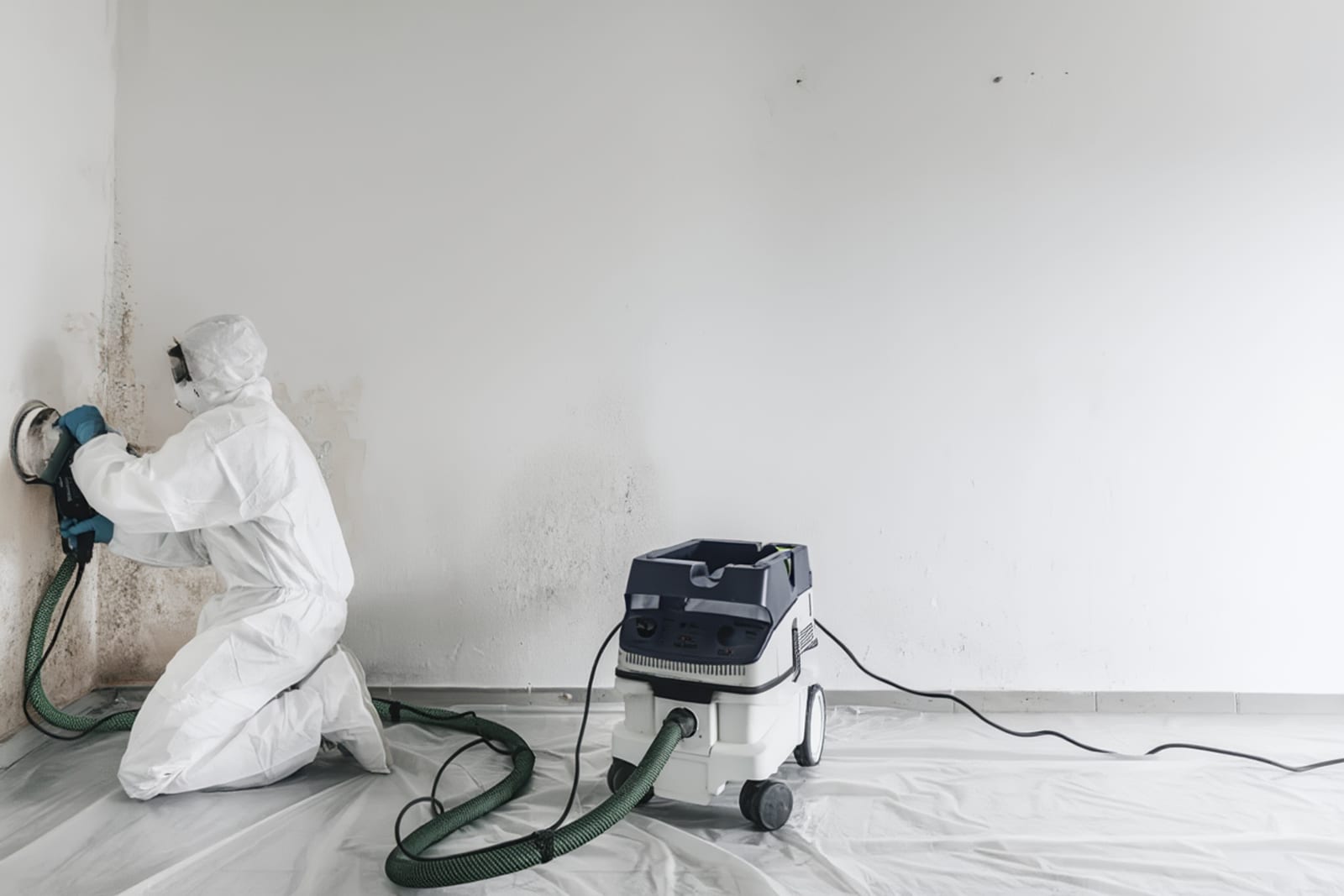
We construct a sealed containment barrier using 6-mil polyethylene sheeting around the work area. Negative air machines with HEPA filters maintain negative pressure inside the containment zone, preventing spores from escaping into the rest of your home.
HEPA Air Filtration
Air scrubbers with true HEPA filters run continuously during remediation to capture airborne spores. These units filter particles down to 0.3 microns — mold spores typically range from 1 to 30 microns.
Material Removal
Contaminated porous materials — drywall, insulation, carpet padding — are carefully removed, double-bagged in sealed disposal bags, and transported out through the containment zone. Non-porous materials like framing lumber are treated in place when contamination is surface-level.
HEPA Vacuuming and Treatment
All surfaces within the containment zone are HEPA-vacuumed and treated with antimicrobial agents. Framing, subfloor, and other structural elements are cleaned to remove residual contamination.
Moisture Source Correction
We identify and document the moisture source that enabled the mold growth. In many cases, a plumbing repair, ventilation improvement, or insulation correction is needed to prevent recurrence.
Post-Remediation Verification
After cleanup, we take clearance air samples to confirm that spore levels have returned to normal background levels. These samples are analyzed by an independent laboratory.
How Long Does Black Mold Removal Take?
The timeline depends primarily on the extent and location of the contamination:
- Small, accessible areas (single wall section, under-sink cabinet): 1 to 3 days including containment setup and clearance testing.
- Moderate contamination (multiple wall sections in one room, bathroom with wall cavity involvement): 3 to 5 days.
- Large or complex contamination (multiple rooms, HVAC involvement, crawl spaces): 5 to 7 days or more, sometimes completed in phases.
These timelines include containment setup (typically half a day), active remediation, and post-clearance testing (results usually take 24 to 48 hours from the lab). We do not rush clearance — if the first round of post-remediation air samples does not pass, we continue work until they do.
After Removal: Testing and Clearance
Post-remediation verification is the step that separates professional remediation from surface cleaning. After all contaminated materials have been removed and surfaces treated, we conduct clearance testing:
- Air sampling inside the remediated area and in a control area outside the containment zone. Spore counts inside should be at or below the control area.
- Surface sampling on treated structural elements to confirm no residual contamination.
- Visual inspection under appropriate lighting to verify no visible mold remains on any surface.
Samples are sent to an accredited laboratory, and results typically take 24 to 48 hours. We provide you with the full lab report and a written clearance letter documenting the results. This documentation is important for your records and may be required by your insurance carrier.
Only after clearance testing passes do we release the containment zone and approve the area for reconstruction. If you need drywall replacement, painting, or other repairs, our team handles the full restoration process so you have a single point of contact from start to finish.


