Why Austin Homeowners Call Us for Emergencies
Real Person Answers 24/7
Our emergency line is staffed around the clock — no voicemail, no answering service. A trained team member picks up, assesses your situation, and dispatches if needed.
60–90 Minute Response
We dispatch crews across the Austin metro. Most active water events get a crew on-site within 60 to 90 minutes of your call — day, night, or weekend.
Truck-Mounted Extraction
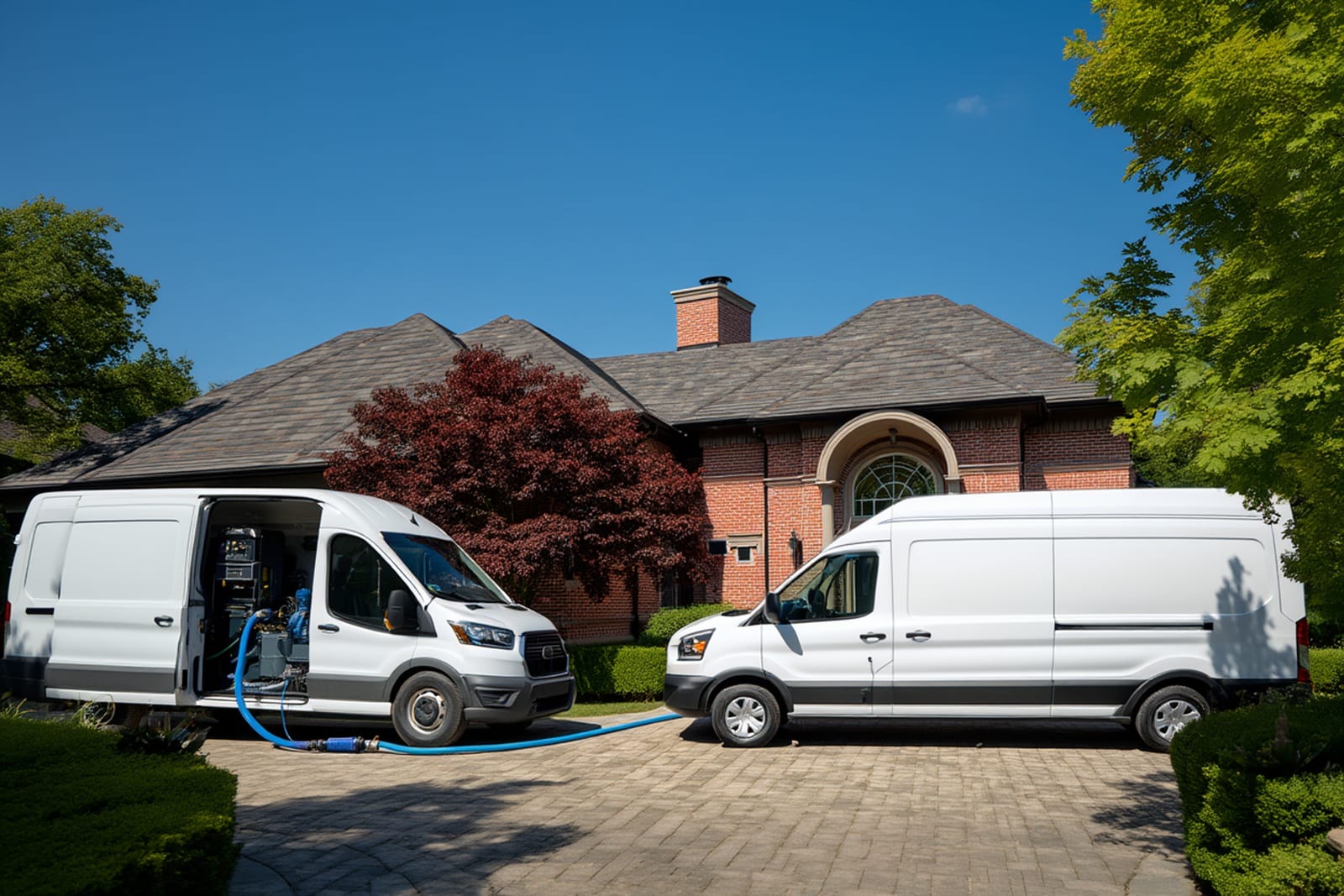
Our trucks arrive loaded with professional-grade extractors and drying equipment. We can begin removing water immediately — no waiting for equipment to be set up from scratch.
Insurance Documentation from Day One
We photograph, measure, and record damage on arrival. That documentation goes directly into your claim file — no scrambling for records weeks later when your adjuster asks.
What Happens When You Call Us
Calling our emergency line at (855) 213-9584 connects you to a real person — not a voicemail system, not an answering service that takes a message. Here is what that call looks like.
First, we assess the situation over the phone. We will ask what happened, when you discovered it, whether the water source is still active, and whether you have been able to shut off the water. Based on your answers, we can often determine the likely scope and urgency before dispatching a crew.
If the situation warrants immediate response, we dispatch a crew with extraction equipment and drying setup loaded on the truck. While the crew is en route, we walk you through what you can do safely — shutting off the water source, moving valuables, and staying away from any electrical hazards.
We do not quote pricing over the phone for emergency work because the scope is not yet determined. What we do commit to is this: once our team is on site and has assessed the damage, we will explain exactly what needs to happen and provide a written scope before any billable work begins. No surprises. If we arrive and it turns out to be a smaller issue than expected, we will tell you that too.
The First Hour: What Our Team Does On Arrival
The first 60 minutes after our team arrives are focused on three priorities: stopping the source, containing the damage, and beginning extraction.
Source Control
If the water source has not been stopped — the homeowner could not find the valve, the break is inside a wall, or the main shut-off is not accessible — our first action is stopping the flow. We carry valve keys and have experience with the shut-off configurations common in Austin homes. For complex plumbing failures, we coordinate with a licensed plumber while proceeding with containment and extraction.
Safety Assessment
Before moving equipment into the affected area, we check for electrical hazards. Standing water near outlets, submerged extension cords, or water near the electrical panel all need to be addressed first. If the electrical panel is in the affected area, we may need to shut off breakers before we can safely work.
Containment
Water travels fast. It flows under walls, through gaps in flooring, and along plumbing and electrical penetrations. We identify the current damage boundary and set up containment — barriers, targeted extraction at the leading edge of the water, and strategic air mover placement — to prevent the affected area from expanding.
Extraction Begins
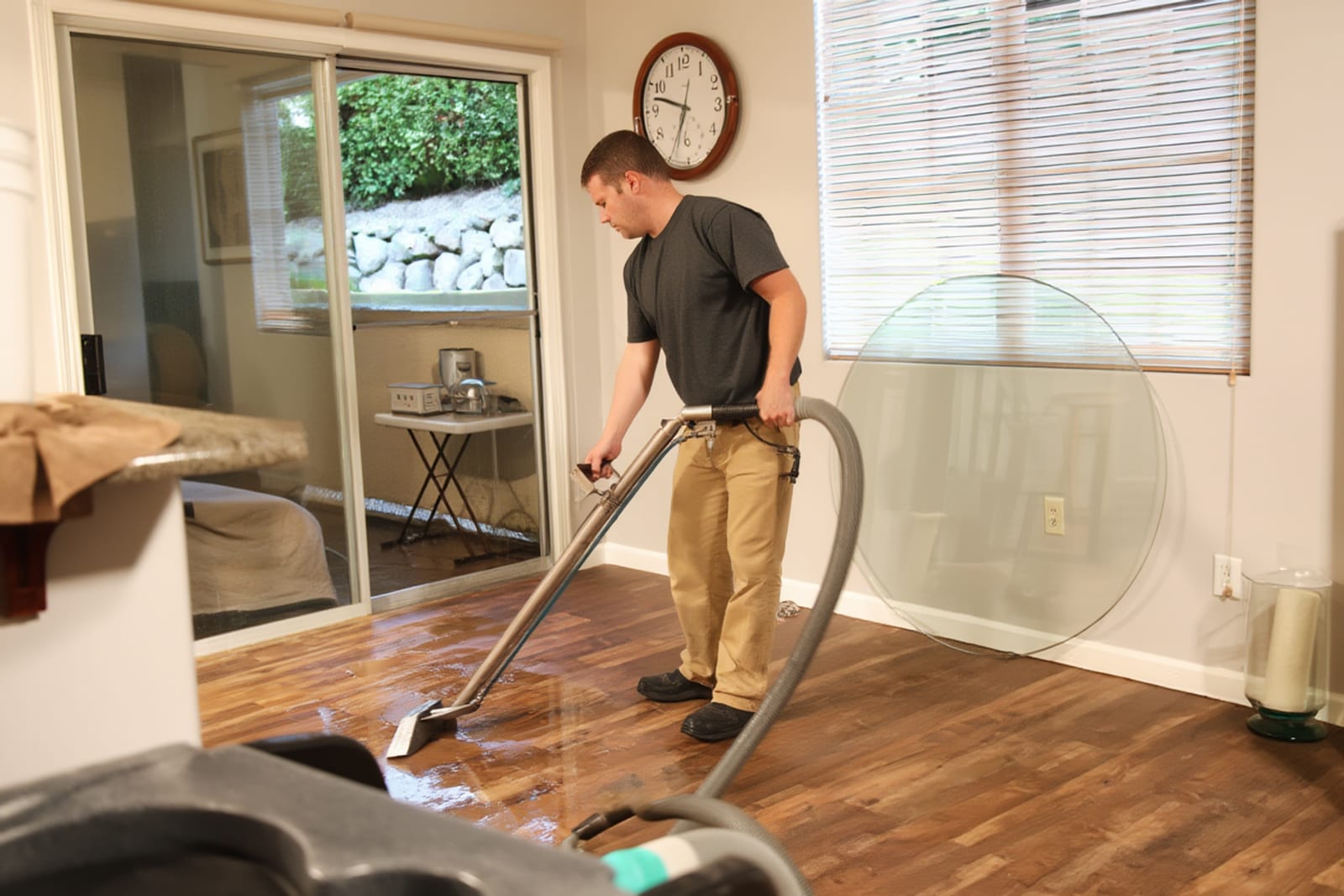
Once the source is controlled and safety is confirmed, we begin removing standing water with truck-mounted extractors and portable pumps. The goal is to remove as much liquid water as mechanically possible in the shortest time, because every minute of contact between water and building materials increases the scope of damage.
Water Emergency? Call Now — We Dispatch 24/7.
Real person answers. Crew en route within the hour. No voicemail, no runaround.
What Qualifies as a Water Damage Emergency
Not every water issue is an emergency, but many are. Here is how to tell the difference — and when to call us immediately versus when you can schedule a next-day assessment.
Call now — this is an emergency:
- Standing water is visible and spreading — any amount that is actively growing
- A pipe has burst and water is flowing or you cannot locate the shut-off valve
- Water is coming through the ceiling or walls — this indicates an active source above
- You smell sewage or see sewage water backing up through drains or toilets
- A water heater has failed and is discharging 40 to 80 gallons into your home
- An appliance line has ruptured — ice maker, dishwasher, washing machine — and water is pooling
Schedule an assessment — likely not an emergency:
- You notice a water stain on the ceiling that is not currently growing
- You found a small area of dampness behind an appliance that appears dry now
- A previous water event was cleaned up but you want the area professionally assessed
When in doubt, call. We can assess your situation over the phone in a few minutes and tell you whether you need immediate service or can wait. There is no charge for that conversation.
Why Response Time Matters: The Damage Timeline
Water damage is progressive. The longer water sits, the worse it gets — and in Austin's warm climate, that progression accelerates. Here is a realistic timeline of what happens when water sits in a home untreated.
First hour: Water spreads across flooring and begins wicking into drywall, carpet pad, and any absorbent material it contacts. Furniture in standing water begins absorbing and potentially staining flooring beneath it.
Hours 2-24: Drywall absorbs water by capillary action, wicking moisture upward well above the visible water line. Hardwood floors begin to cup as the bottom of the board absorbs moisture faster than the top. Carpet pad becomes fully saturated and begins to deteriorate. Metal surfaces begin to tarnish.
24-48 hours: Mold can begin forming on organic materials in Austin's warm, humid conditions. Drywall that has been saturated for this long often cannot be dried effectively and must be removed. Hardwood floor damage may become permanent.
48-72 hours: Microbial growth accelerates. Clean Category 1 water may degrade to Category 2 or 3 as bacteria multiply. The scope and cost of restoration increases significantly.
Beyond 72 hours: Structural wood components begin to swell and weaken. Mold remediation becomes a near-certainty. The line between "restoration" and "major reconstruction" starts to blur.
This timeline is why we emphasize rapid response. It is not a sales tactic — it is building science. The faster extraction begins, the more materials can be saved and the lower the total project cost.
Common Emergency Scenarios We Handle
Burst supply lines. The most common water damage emergency we see in Austin. Copper supply lines, flexible braided hoses, and PEX connections can all fail — sometimes from age, sometimes from pressure fluctuations, and occasionally from manufacturing defects. A single burst supply line can discharge hundreds of gallons per hour.
Water heater failures. Austin homes typically have 40 to 80-gallon water heaters, often located in a closet, garage, or attic. When the tank fails, that entire volume hits the floor at once — and if the supply line continues feeding, the discharge continues until someone shuts it off.
Appliance line failures. Washing machine hoses, dishwasher connections, and ice maker lines are common failure points. These events are often discovered hours after they begin because they happen behind or underneath appliances.
Sewage backups. Sewer line blockages cause Category 3 contaminated water to back up through toilets, floor drains, and shower drains. These events require specialized cleanup protocols, personal protective equipment, and disposal of contaminated porous materials.
Toilet and fixture overflows. A running toilet that overflows can discharge clean supply water (Category 1) or contaminated water (Category 2 or 3) depending on the nature of the overflow. Either way, the volume can be significant if not caught quickly.
How to Minimize Damage While You Wait
While you are waiting for our crew to arrive, here are the most effective things you can do — and the things to avoid.
Turn Off the Water Source
This is the single most impactful action. For a specific fixture, use the local shut-off valve (under the sink, behind the toilet). If you cannot identify the source, shut off the main water supply at the meter near the street.
Move Valuables to Safety
Get electronics, documents, and small valuables out of the wet area. Lift curtains off wet floors. Place aluminum foil or plastic sheeting under furniture legs to prevent staining.
Do Not Use Household Vacuums
Shop vacs and household vacuums are not rated for water extraction and create electrical hazards when used with standing water.
Do Not Remove Materials
Resist the urge to pull up carpet or tear out drywall. Our team needs to see and document the damage in place for accurate assessment and insurance documentation.
For a more detailed guide, see our resource on what to do after water damage.
FAQ
Emergency Water Removal — Service Areas
We provide emergency water removal throughout the greater Austin metro area, including: Round Rock · Cedar Park · Georgetown · Pflugerville · Kyle · Buda · San Marcos · Leander · Lakeway. Contact us for service in your area.


