What Our Mold Inspection Includes
Visual & Instrument Assessment
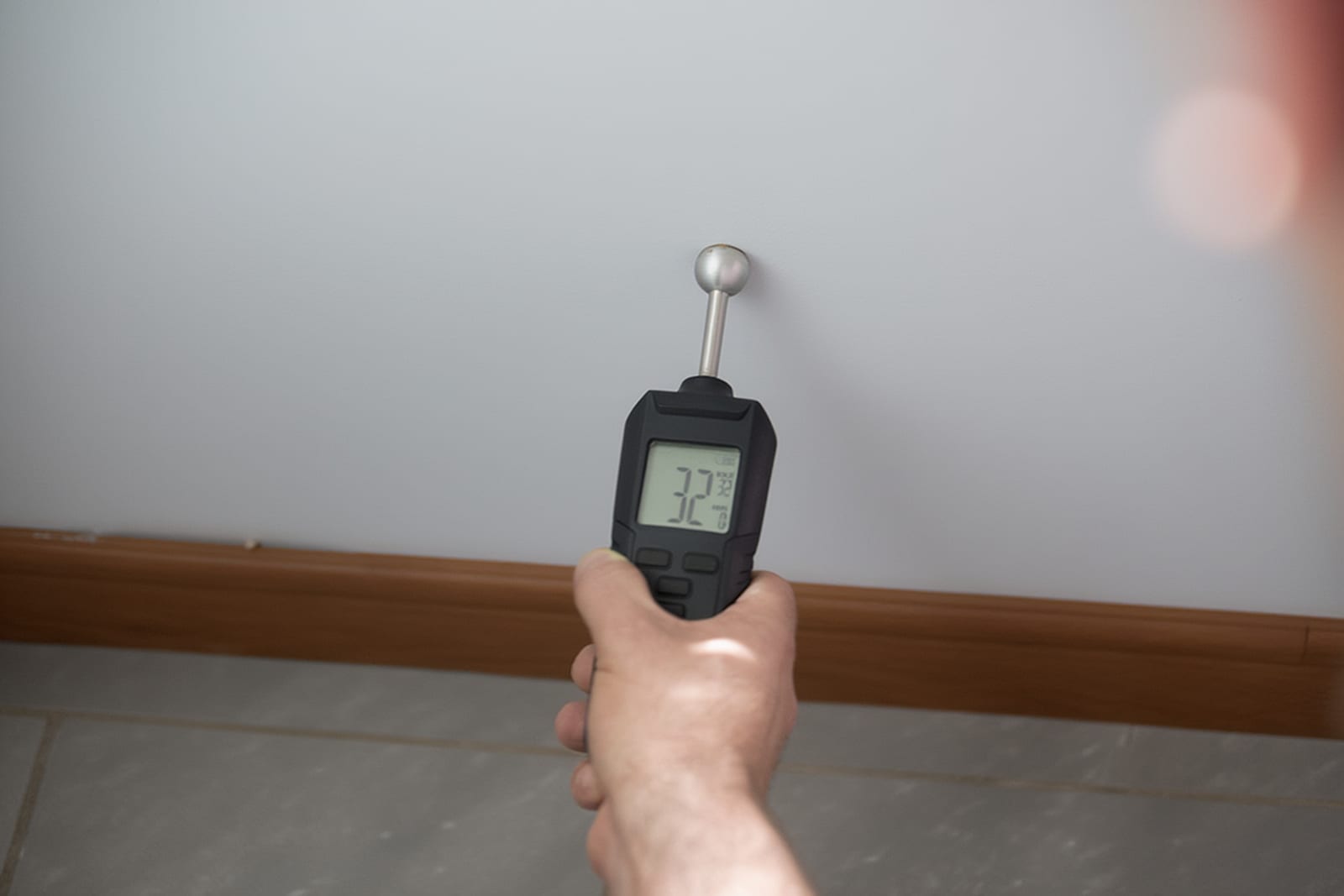
Full walk-through of all accessible areas — walls, ceilings, crawl spaces, attic, HVAC. Pin-type and capacitance moisture meters check materials throughout the home.
FLIR Thermal Imaging
Thermal cameras reveal hidden moisture behind walls and ceilings without cutting. Wet materials cool differently — we spot active leaks and accumulation zones fast.
Certified Lab Analysis
Air samples and surface swabs sent to an accredited laboratory. Results identify species, spore counts, and whether indoor levels indicate an active indoor source.
Moisture Source Identification
We trace the root cause — plumbing leak, HVAC condensation, foundation vapor, roof penetration. The report documents the source so the right repair gets made.
What a Mold Inspection Covers
A professional mold inspection goes well beyond a visual walk-through. Our inspections in Austin homes follow a structured protocol that evaluates three things: visible indicators, hidden moisture conditions, and airborne spore levels.
Visual Assessment
We examine every accessible area of the home — walls, ceilings, baseboards, under sinks, around windows, inside closets, the attic, and any crawl spaces. We look for visible mold growth, water staining, discoloration, bubbling paint, warped materials, and musty odors that indicate active moisture problems.
Moisture Survey
Using pin-type moisture meters and non-invasive capacitance meters (like the Tramex Moisture Encounter), we measure moisture content in building materials throughout the home. Elevated readings indicate areas where mold may be growing behind surfaces even when nothing is visible.
Thermal Imaging
FLIR thermal cameras detect temperature anomalies that indicate moisture accumulation. Wet materials are cooler than surrounding dry materials due to evaporative cooling. Lets us survey large areas quickly and identify spots that warrant further investigation — without cutting into walls.
HVAC Evaluation
We inspect accessible ductwork, air handler components, and the area around the condensate drain line. In Austin, where air conditioning runs 7 to 9 months of the year, condensation-related mold in and around HVAC systems is a frequent finding.
Types of Mold Testing: Air Sampling, Surface Swabs & Bulk Sampling
When testing is warranted, we use one or more sampling methods depending on the situation. Each method answers a different question.
Air Sampling (Spore Trap)
A calibrated air pump draws air through a collection cassette (Air-O-Cell or Micro-5) that captures airborne particles. We compare indoor samples to an outdoor control. Elevated indoor levels of specific species indicate an active indoor source.
Surface Sampling (Swabs & Tape Lifts)
A sterile swab or adhesive tape pressed against the surface is sent to the lab for species identification. Answers "what type of mold is this?" — useful for distinguishing Stachybotrys from less concerning species.
Bulk Sampling
A small piece of affected material — drywall, carpet backing, wood — is removed and sent to the lab. Provides the most detailed information about species identification and colonization depth, but requires minor material removal.
We recommend the testing method based on your specific situation. Not every inspection requires every type of test. If mold is clearly visible and the moisture source is obvious, species identification via surface sampling may be sufficient. If you suspect hidden mold but cannot see it, air sampling is the better diagnostic tool.
Need a Mold Inspection? Call to Schedule.
We assess your home, collect samples for lab analysis, and deliver clear results with actionable recommendations.
Moisture Assessment: Finding the Source
Identifying the moisture source is arguably the most important part of a mold inspection. Removing mold without fixing the moisture problem guarantees it will return.
In Austin homes, the most common moisture sources we identify during inspections include:
- Plumbing leaks — supply lines, drain connections, and toilet wax ring failures. Many of these are slow leaks that have been active for months before mold becomes visible.
- HVAC condensation — condensate drain line clogs, poorly insulated ductwork in unconditioned spaces, and oversized AC systems that cycle too quickly to dehumidify effectively.
- Foundation moisture — Austin's expansive clay soil (the Taylor and Austin Chalk formations) holds water against slab foundations. Moisture migrates through the concrete by vapor transmission, raising humidity levels in rooms with direct slab contact.
- Roof and flashing leaks — particularly around penetrations (vents, chimneys) and at transitions between roofing materials.
- Grading and drainage — landscape grading that directs water toward the foundation rather than away from it.
Our inspection report documents the suspected moisture source with supporting evidence (moisture readings, thermal images, visual indicators) so that the appropriate repair can be made — whether that is a plumbing fix, drainage correction, or HVAC adjustment.
Reading Your Mold Test Results
Lab reports from mold testing can be confusing. Here is how to interpret the key data points:
Spore counts are reported as spores per cubic meter of air (spores/m3). There is no universal "safe" level — the EPA and CDC have not established numerical standards for acceptable indoor mold levels. Instead, results are evaluated by comparing indoor samples to the outdoor control sample.
- If indoor spore types and concentrations are similar to or lower than outdoors, there is no indication of an active indoor mold source.
- If indoor levels of a specific species are significantly elevated compared to outdoors, that species likely has an active indoor source.
- The presence of certain species (like Stachybotrys or Chaetomium) at any concentration indoors is noteworthy, because these species require sustained high moisture and indicate a significant water problem.
Species identification from surface samples tells you what type of mold is growing. Common findings include Cladosporium (very common, typically outdoor origin), Aspergillus and Penicillium (common indoors, can indicate moisture issues), and Stachybotrys (always indicates a serious moisture problem requiring professional remediation).
We walk you through the results in plain language and explain what they mean for your specific situation. A lab report alone does not tell you what to do next — it needs to be interpreted in the context of the visual inspection, moisture findings, and your home's construction.
When Do You Need a Mold Inspection?
Not every situation requires a full mold inspection with laboratory testing. Here is a practical guide:
An inspection is recommended when:
- You notice a persistent musty odor but cannot see mold anywhere
- You have had water damage and want to verify that mold has not developed
- You or family members are experiencing unexplained respiratory symptoms that improve when away from home
- You are purchasing a home and want to evaluate moisture conditions before closing
- You had previous mold remediation and want to confirm the problem was resolved
An inspection may not be necessary when:
- You can clearly see mold growing and the affected area is small enough to address directly
- The moisture source is obvious (a leaking pipe you have already repaired) and the affected area is limited
When in doubt, an inspection provides clarity. It either confirms the problem and defines its scope, or it gives you peace of mind that your home is clean.
Inspection vs. Remediation: Which Comes First?
Inspection always comes first. Before any mold can be removed, you need to know what you are dealing with: the species, the extent of contamination, the moisture source, and whether the problem has affected areas beyond what is visible.
An inspection report serves as the remediation plan. It identifies what areas need to be treated, what materials need to be removed, and what moisture corrections are required to prevent recurrence. Without this information, remediation crews are working blind — they may treat the visible growth while missing hidden contamination, or they may fail to address the moisture source.
After remediation is complete, a follow-up inspection with post-clearance air sampling verifies that the work was successful. This creates a documented chain: pre-remediation testing (problem confirmed), remediation work (problem addressed), and post-remediation testing (resolution verified).


