Our Mold Remediation Approach
Full Containment on Every Job
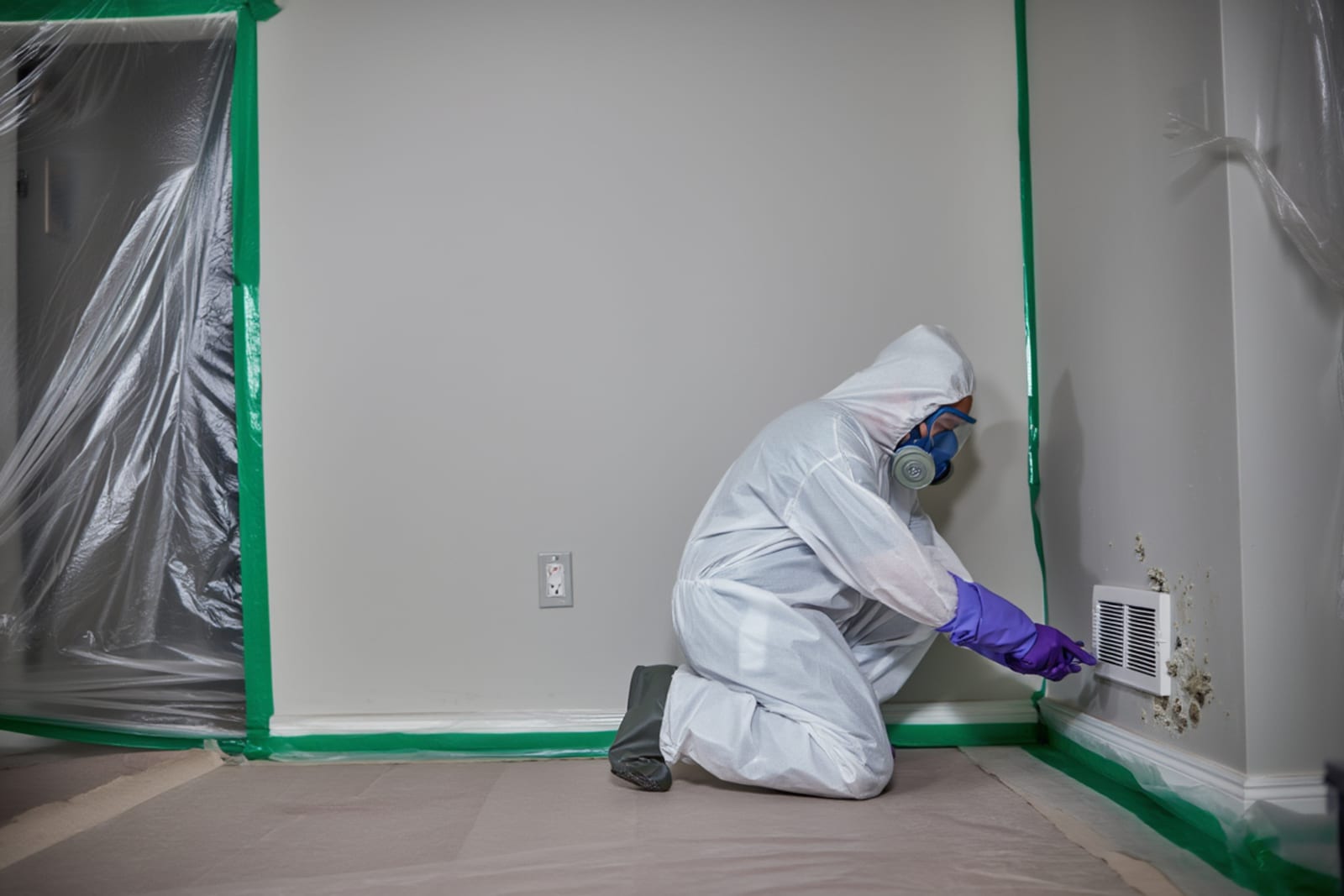
Polyethylene barriers and negative-air HEPA scrubbers are set before any material is disturbed. Spores stay in the work zone — not in the rest of your home.
Clearance Testing Included
We don't call a job done on our word alone. Air and surface samples confirm that spore counts have returned to background levels. Documentation for insurance and future resale.
Moisture Source Correction
Removing mold without fixing the moisture source is a temporary fix. We identify and address the underlying cause so the problem doesn't return in the same spot weeks later.
Texas TDLR Compliant
Mold remediation in Texas is regulated by TDLR. Our process meets all state requirements for containment, removal, and documentation — including the assessment-remediation separation rule.
What Mold Remediation Actually Involves
Mold remediation is the process of identifying, containing, and removing mold growth from a structure, then treating the affected area to prevent recurrence. It is a regulated process in Texas — the Texas Department of Licensing and Regulation (TDLR) oversees mold assessment and remediation — and it follows specific protocols designed to protect both occupants and workers.
Remediation is not the same as cleaning. Cleaning addresses mold on surfaces — wiping visible growth from a bathroom tile or scrubbing a window frame. Remediation addresses mold that has colonized porous building materials: drywall, insulation, wood framing, carpet, and subfloor. These materials cannot be cleaned to a level where the mold is fully eliminated — the affected sections must be removed, the structural surfaces behind them treated, and the area verified clean before reconstruction.
The distinction matters because incomplete treatment is arguably worse than no treatment at all. Cleaning surface mold while leaving contaminated materials in place gives the appearance of resolution while the mold continues growing behind the wall or under the floor. Within weeks or months, the problem reappears — often worse than before.
How Mold Grows After Water Damage
Mold needs three things to grow: moisture, an organic food source, and warmth. Austin provides two of the three year-round — organic building materials (drywall paper, wood framing, carpet) and warm temperatures. The only missing ingredient is sustained moisture, and that is exactly what a water damage event provides.
Here is the typical progression in Austin's climate:
Day 1-2 after water exposure: Mold spores — which are always present in the air — land on wet organic surfaces and begin germinating. Visible growth is not yet apparent, but colonization has started at a microscopic level.
Day 2-5: Visible mold growth appears on the most absorbent surfaces: drywall paper facing, carpet backing, cardboard, and untreated wood. Growth is typically most rapid in enclosed spaces with poor airflow — inside wall cavities, under cabinets, beneath floating floors.
Day 5-14: Mold colonies expand and begin producing spores, which become airborne and spread to other surfaces. Musty odor becomes noticeable. Growth may be visible on walls, ceilings, and around the perimeter of the original water damage.
This timeline is why prompt water damage mitigation is so important. Extracting water and beginning structural drying within the first 24 to 48 hours eliminates the sustained moisture that mold needs. Once the structure is dry, dormant spores cannot colonize.
The Remediation Process: Step by Step
Assessment and Scope Definition
Before any containment goes up, we perform a thorough assessment to determine the full extent of mold growth. This involves visual inspection, moisture readings to identify areas of ongoing dampness, and in some cases air quality sampling or surface sampling. The goal is to define the remediation boundary — every area of growth must be included in the work scope.
Containment
The affected area is sealed off from the rest of the home using polyethylene sheeting and tape. We establish negative air pressure within the containment zone using HEPA-filtered air scrubbers, which means air flows into the work area but contaminated air cannot escape into the living space. This prevents spore migration during removal — the most critical safety measure in the process.
Air Filtration
HEPA air scrubbers run continuously during remediation, capturing airborne mold spores and particles down to 0.3 microns. These units filter the air within the containment zone multiple times per hour, keeping spore counts low during the most disruptive phases of the work.
Removal of Contaminated Materials
All porous materials with mold growth are carefully removed and bagged for disposal. This includes affected drywall, insulation, carpet, carpet pad, and in some cases wood trim or paneling. Removal is done methodically to minimize disturbance of mold colonies, and all debris is double-bagged in heavy-duty plastic before leaving the containment zone.
Treatment of Structural Surfaces
After contaminated materials are removed, the exposed structural surfaces — wall studs, top and bottom plates, subfloor, concrete — are treated with EPA-registered antimicrobial agents and, in some cases, HEPA-vacuumed to remove residual spores. Wood framing is sanded if surface mold staining remains after treatment.
Drying Verification
Before the area is cleared for reconstruction, we verify that moisture levels in all structural materials are at or below target levels. Mold was caused by moisture — and if the moisture source has not been resolved, remediation is temporary. We confirm the area is dry and the moisture source has been repaired.
Clearance Testing
An independent assessment — either our team or a third-party assessor — takes post-remediation air samples and surface samples to verify that spore counts have returned to normal background levels. Clearance testing is the objective proof that remediation was successful. We do not recommend skipping it.
Ready to Address Mold in Your Austin Home?
Call for a professional assessment. We explain the scope, process, and cost before any work begins.
Black Mold vs. Other Mold
The term "black mold" gets a lot of attention, but it is worth understanding what it actually means — and what it does not.
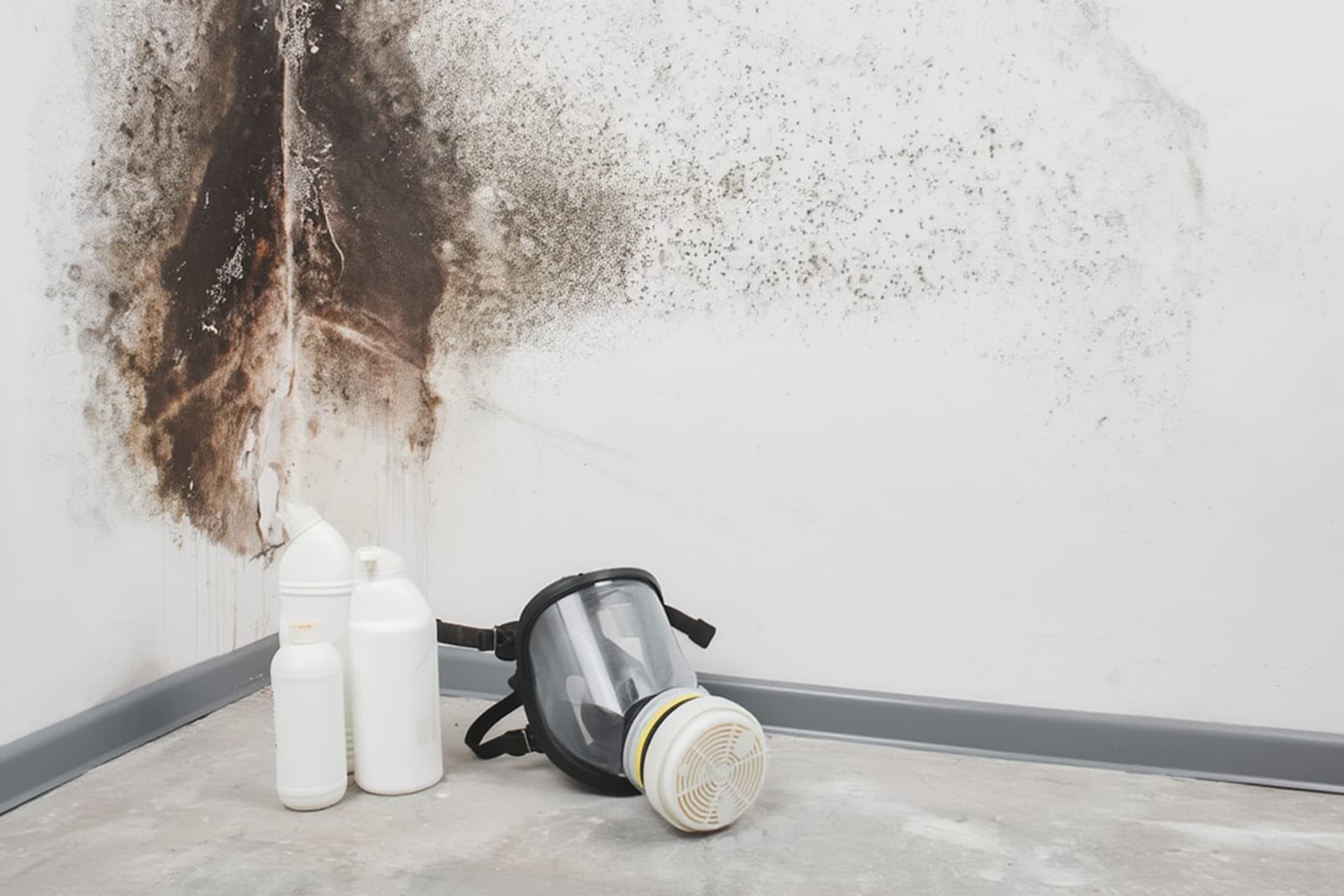
"Black mold" usually refers to Stachybotrys chartarum, a slow-growing mold that requires sustained moisture and high cellulose content (like paper-faced drywall) to thrive. It can produce mycotoxins — secondary metabolites that may cause health effects in some individuals, particularly those with respiratory conditions or compromised immune systems.
However, many common molds are dark in color. Cladosporium, Aspergillus, Penicillium, and Alternaria can all appear dark green, brown, or black. Color alone does not identify the species or determine its health risk. The only way to confirm a specific mold species is laboratory analysis of a sample — either an air sample or a surface swab.
From a remediation standpoint, the protocol is the same regardless of species. Containment, HEPA filtration, material removal, surface treatment, and clearance testing are required for any significant mold colonization in an occupied structure. We do not treat Stachybotrys differently from Aspergillus — the remediation science is the same.
Mold Inspection and Testing
Whether you need mold testing depends on the situation. Here is a practical guide to when testing adds value and when it does not.
Testing is valuable when: mold is suspected but not visible (musty odor, health symptoms, known water history); you need documentation for an insurance claim; you want to confirm the specific species for health or legal reasons; you want post-remediation clearance verification; you are buying or selling a home with a water damage history.
Testing may not be necessary when: visible mold growth is clearly present and you have already decided to remediate. The remediation protocol does not change based on species — if you can see it and it covers a significant area, it needs professional removal regardless of what the lab report says.
A mold inspection typically involves a visual survey, moisture assessment of suspect areas, and air or surface sampling sent to a certified laboratory. Results usually take 2 to 5 business days. In Texas, mold assessment and remediation must be performed by different entities unless the property owner waives that requirement in writing — this regulation exists to prevent conflicts of interest.
Containment, Removal and Clearance Testing
These three elements form the backbone of professional mold remediation, and each one serves a distinct purpose.
Containment protects the unaffected areas of your home during the remediation process. Without containment, removing mold-contaminated drywall sends millions of spores into the air, which then settle on surfaces throughout the house. Proper containment — polyethylene barriers, sealed penetrations, negative air pressure — keeps the disturbance contained to the work area. This is perhaps the single biggest difference between professional remediation and DIY attempts.
Removal is the physical elimination of colonized materials. This is not surface cleaning — it is the complete removal of porous materials where mold has penetrated beyond the surface. Drywall cannot be scrubbed clean of mold because the growth extends through the paper facing and into the gypsum core. The material must be cut out, bagged, and disposed of.
Clearance testing is the verification step that confirms remediation was successful. Air samples are taken inside the remediated area and compared to outdoor baseline samples. Spore counts inside should be at or below outdoor levels. Clearance testing provides objective documentation that the work was completed to standard — important for your peace of mind, for insurance, and for any future real estate transaction.
Preventing Mold After Remediation
Remediation removes existing mold, but prevention keeps it from returning. Since mold growth is always a moisture problem, prevention focuses on moisture control.
Address the water source. If the mold resulted from a water damage event, make sure the cause has been fully repaired. A remediated wall next to an unrepaired slow leak will develop mold again within weeks.
Control indoor humidity. Keep indoor relative humidity below 60% — ideally between 30% and 50%. In Austin, this often means running the AC during humid months and using a dehumidifier in closed spaces like closets, laundry rooms, and bathrooms without exhaust fans. Monitor with an inexpensive hygrometer.
Ensure proper ventilation. Bathrooms and kitchens need functioning exhaust fans that vent to the exterior (not into the attic). Attic spaces need adequate ventilation to prevent moisture buildup. Laundry dryers must vent outside.
Monitor problem areas. After remediation, check the area periodically — especially during the first six months. Look for any signs of moisture return: staining, musty odor, condensation. Early detection makes the difference between a simple fix and another remediation project.
FAQ
Mold Remediation — Service Areas
We provide mold remediation throughout the greater Austin metro area, including: Round Rock · Cedar Park · Georgetown · Pflugerville · Kyle · Buda · San Marcos · Leander · Lakeway. Contact us for service in your area.


