Why Professional Sewage Cleanup Is Non-Negotiable
Full PPE Crews
Every technician enters Category 3 areas in Tyvek suits, N95/P100 respirators, chemical-resistant gloves, and eye protection — the IICRC standard for sewage events.
HEPA Containment + Negative Air
Poly barriers isolate the affected zone. Air scrubbers run in negative-pressure mode to capture bioaerosols before they migrate to clean areas of the home.
EPA-Registered Disinfectants
We use broad-spectrum antimicrobials with documented kill claims against bacteria, viruses, and fungi — applied at correct contact times, not sprayed and wiped.
Insurance-Grade Documentation
Dated photos, moisture logs, contamination category notation, material inventory, and Xactimate-format scope — everything your adjuster needs to process a Category 3 claim.
Why Sewage Backup Is Different
Sewage backup is handled differently from other water damage events because of what is in the water. A burst supply line (Category 1) introduces clean water into the home. A dishwasher overflow (Category 2) introduces mildly contaminated grey water. Sewage backup introduces water that has passed through the municipal sewer system — it contains fecal matter, bacteria (including E. coli and Salmonella), viruses, parasites, and other biological hazards.
This contamination level changes everything about how the cleanup is performed. The safety protocols are stricter. The demolition scope is wider — all porous materials that contacted the water must be removed, not just saturated ones. The disinfection requirements are more rigorous. And the documentation needs to clearly identify the event as Category 3 for proper insurance handling.
The other significant difference is urgency. While all water damage benefits from rapid response, Category 3 events carry an immediate health risk to anyone in the home. Sewage water on floors, in wall cavities, or pooled in basements creates an environment where pathogens can spread through direct contact, airborne particles, and cross-contamination. The affected area should be avoided until professional cleanup begins.
Category 3 Water: Health Risks
Understanding the health risks of sewage backup helps explain why professional cleanup with proper protocols is not optional — it is a safety necessity.
Bacterial Contamination
Sewage water commonly contains E. coli, Salmonella, Shigella, and other pathogenic bacteria. Contact — even indirect contact through contaminated surfaces — can cause gastrointestinal illness, skin infections, and other bacterial infections.
Viral Contamination
Hepatitis A, rotavirus, and other enteric viruses can be present in sewage water. These pathogens can remain viable on surfaces for extended periods, which is why thorough disinfection of all contacted hard surfaces is required.
Parasites
Cryptosporidium, Giardia, and other parasites found in sewage are resistant to many common disinfectants and require specific treatment protocols.
Airborne Hazards
As sewage water evaporates and dries, particulate matter becomes airborne. These bioaerosols can cause respiratory irritation and illness, which is why air scrubbers with HEPA filtration are used during cleanup to capture airborne contaminants.
Because of these risks, our crews wear full personal protective equipment during Category 3 work — Tyvek suits, respirators, chemical-resistant gloves, and eye protection. This is not overcaution. It is the IICRC standard for Category 3 water damage, and it is the only responsible way to handle sewage exposure.
Sewage Backup? Call Now — Category 3 Requires Immediate Response.
Our crews arrive with full PPE, containment equipment, and industrial disinfectants. Available 24/7.
The Sewage Cleanup Process
Sewage backup cleanup follows a specific protocol that is more aggressive than standard water damage cleanup. Each step is designed to eliminate the contamination — not just remove the water.
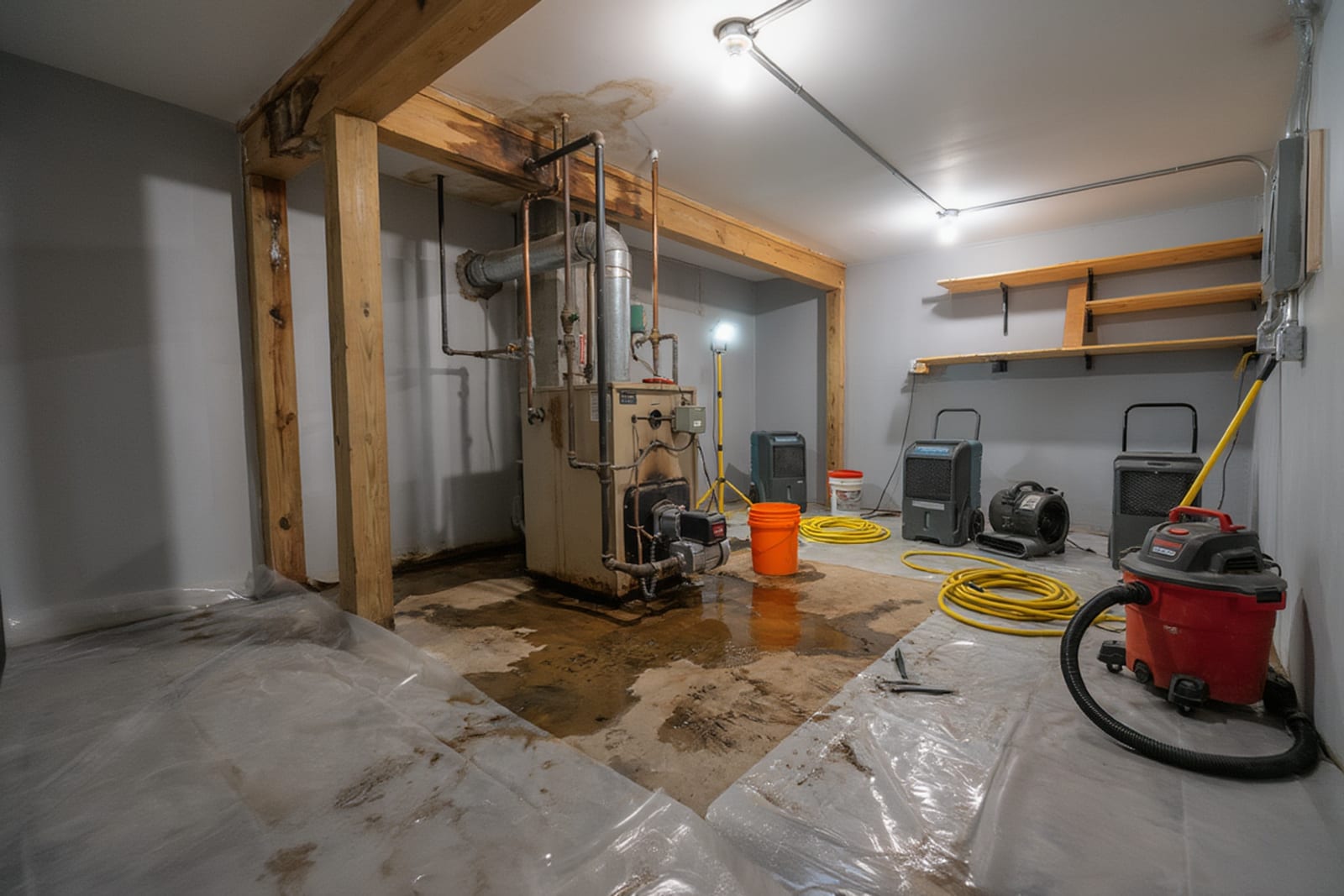
Containment and safety setup. Before extraction begins, the affected area is isolated from the rest of the home. Polyethylene barriers are erected at entry points, and negative air pressure is established using air scrubbers with HEPA filtration. This prevents airborne contaminants from spreading to unaffected rooms. The HVAC system serving the affected area is shut down to prevent cross-contamination through ductwork.
Sewage extraction. Standing sewage water is extracted using dedicated equipment — separate from the equipment used on clean water events. Truck-mounted extractors and portable pumps remove the bulk of the water, followed by detailed extraction around fixtures, cabinetry, and wall perimeters. All extracted water is disposed of in accordance with local regulations.
Removal of contaminated materials. This is where Category 3 cleanup differs most visibly from other water damage work. All porous materials that contacted sewage water are removed — no exceptions. This includes carpet and pad, drywall (typically cut 24 inches above the visible water line, sometimes higher if wicking is detected), insulation, baseboards, particleboard shelving or cabinetry, cardboard, paper goods, and any absorbent materials. These materials cannot be effectively disinfected and must be bagged, sealed, and disposed of as contaminated waste.
Cleaning and disinfection of hard surfaces. Non-porous surfaces that contacted sewage — concrete slab, tile, metal framing, solid surface countertops — are cleaned with detergent, then disinfected using EPA-registered products effective against the pathogens present in sewage. This is a multi-step process: clean, then disinfect, then verify. A single pass with a spray bottle is not sufficient.
Structural drying. After disinfection, the exposed structure is dried using the same commercial equipment described in our structural drying page — LGR dehumidifiers and high-velocity air movers. Drying after a Category 3 event is particularly important because any residual moisture in framing or subfloor can support microbial growth from the contamination that was introduced.
Clearance verification. Before reconstruction begins, the area is inspected to confirm that all contaminated materials have been removed, all hard surfaces have been properly disinfected, and moisture levels are within acceptable parameters. Some insurance carriers require third-party clearance testing for Category 3 events.
Disinfection Protocols
Disinfection after a sewage event is a multi-step process, not a single spray-and-wipe. Here is what proper disinfection looks like.
Pre-cleaning. Surfaces are first cleaned with detergent to remove visible soil, grease, and organic matter. Disinfectants do not work effectively on dirty surfaces — the organic matter neutralizes the active ingredients. Pre-cleaning removes the physical contamination so the disinfectant can do its job.
Application of registered disinfectant. EPA-registered broad-spectrum antimicrobial agents are applied to all hard surfaces that contacted sewage water. The product must remain wet on the surface for the specified contact time — typically 10 to 15 minutes — to achieve the listed kill rates against bacteria, viruses, and fungi. This contact time is critical and cannot be shortened.
Structural treatment. Exposed wood framing (studs, top plates, bottom plates) that was in contact with or adjacent to sewage water is cleaned, disinfected, and in some cases sanded to remove surface staining. Concrete slab is scrubbed with detergent, then treated with disinfectant. If the concrete is unfinished, it may require an encapsulant sealer after disinfection.
HVAC evaluation. If the HVAC system was running during the sewage event, or if ductwork in the affected area was exposed to contamination, the ductwork may need to be cleaned or sealed. We assess this on a case-by-case basis and recommend professional HVAC cleaning when warranted.
How Long Does Sewage Cleanup Take?
Sewage backup cleanup takes longer than standard water damage cleanup because of the additional demolition, disinfection, and safety protocols involved.
Day 1: Containment setup, extraction, removal of contaminated materials, and initial cleaning. This is the most intensive day and typically requires a full crew working 6 to 10 hours depending on the scope.
Days 2-3: Detailed cleaning and disinfection of all hard surfaces. Application of antimicrobial treatment to exposed framing. Air scrubbers continue running. Equipment setup for structural drying begins.
Days 3-7: Structural drying with daily monitoring. Duration depends on the volume of water, affected materials, and atmospheric conditions. Austin's warm climate generally supports efficient drying.
After clearance: Repair and reconstruction begins — replacing drywall, insulation, flooring, baseboards, and paint. The reconstruction timeline depends on the scope of demolition and material availability.
Total project duration for a typical residential sewage backup in Austin — from initial cleanup through completed repairs — is usually 2 to 4 weeks. Larger events or projects involving mold remediation as a secondary issue can take longer.
Does Insurance Cover Sewage Backup in Texas?
This is one of the most common questions we get, and the answer requires some nuance.
Standard homeowner's policies in Texas typically do not cover sewage backup by default. Most standard policies cover "sudden and accidental" water damage from internal sources — burst pipes, failed appliance connections — but specifically exclude sewer and drain backup.
However, many carriers offer a sewage backup endorsement (sometimes called "water backup" or "sewer and drain" coverage) that can be added to your policy. This endorsement is usually inexpensive — often $50 to $100 per year — and provides coverage for sewer backup events up to a specified limit. Check your declarations page or call your carrier to see if you have this endorsement.
If you do have the endorsement, we document the event to the standard your carrier requires: dated photos, moisture readings, contamination category identification, inventory of removed materials, and Xactimate-formatted scope of work. For more detail on the claims process, see our insurance claims guide.
If you do not have the endorsement, we still provide the same documentation. Some homeowners choose to file under their standard policy's water damage provision — the coverage determination is ultimately between you and your carrier. We provide the factual documentation regardless.


