
Signs of Water Damage in Your Austin Home — A Homeowner's Detection Guide
Water damage does not always announce itself with a flood. More often, it hides behind walls, under flooring, and above ceilings — revealing itself through subtle signs that are easy to overlook until the damage has spread. This guide shows you exactly what to look for, room by room, so you can catch problems early.
Catching water damage early is the difference between a manageable repair and a major restoration project. Many of the signs below are things homeowners see every day and dismiss. Knowing what they actually mean gives you a significant advantage.

Visible Signs of Water Damage
These are the indicators you can spot during a routine walkthrough of your home — no equipment needed, just attention to detail.
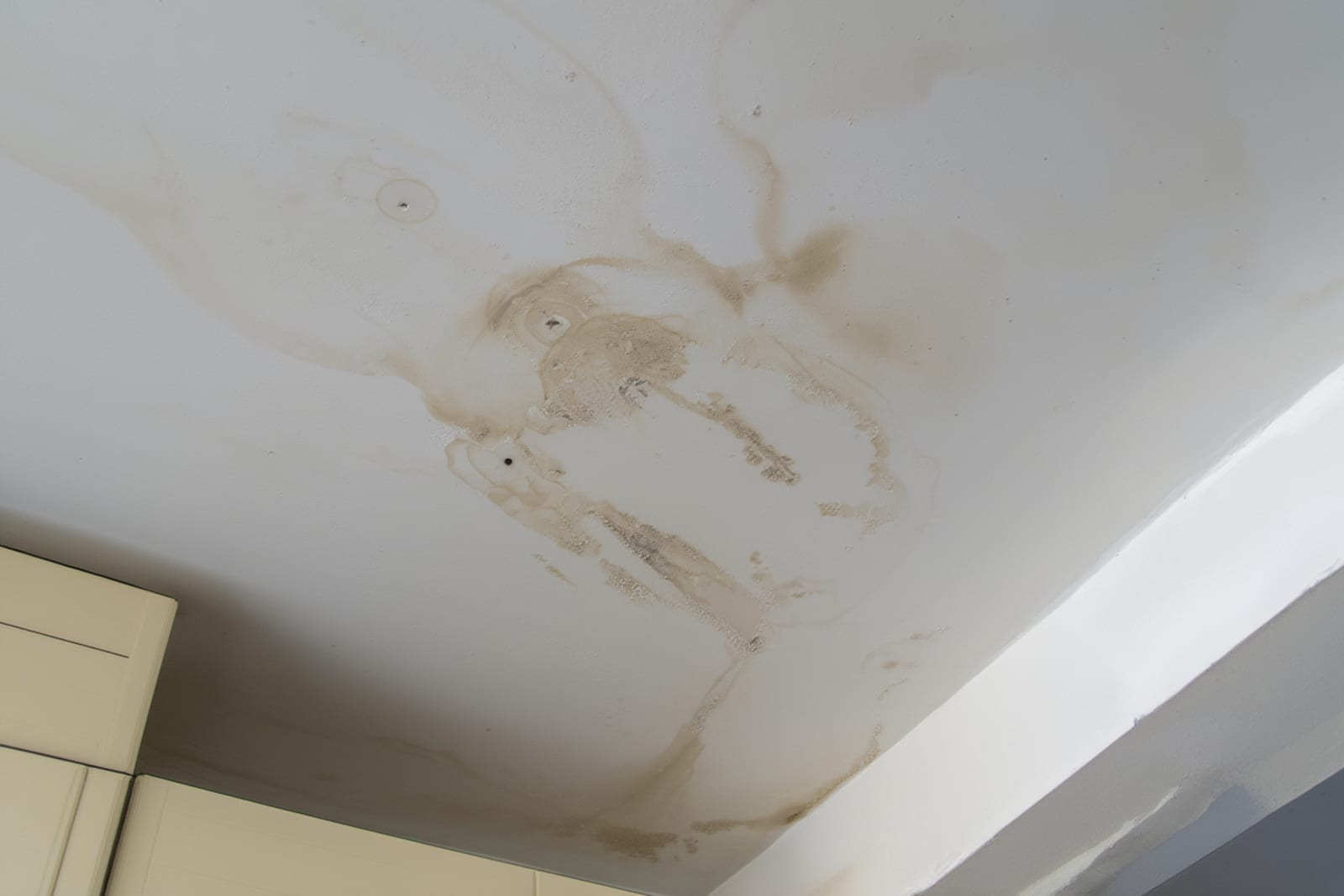
Discoloration on Walls or Ceilings
Yellowish-brown stains with irregular edges are the classic sign of water intrusion. Fresh stains appear darker and may feel damp. Older stains are lighter with a distinct ring or tide line at the moisture boundary. The photo shows a typical ceiling stain pattern — notice the darker center where moisture concentration was highest and the lighter ring where it dried first.
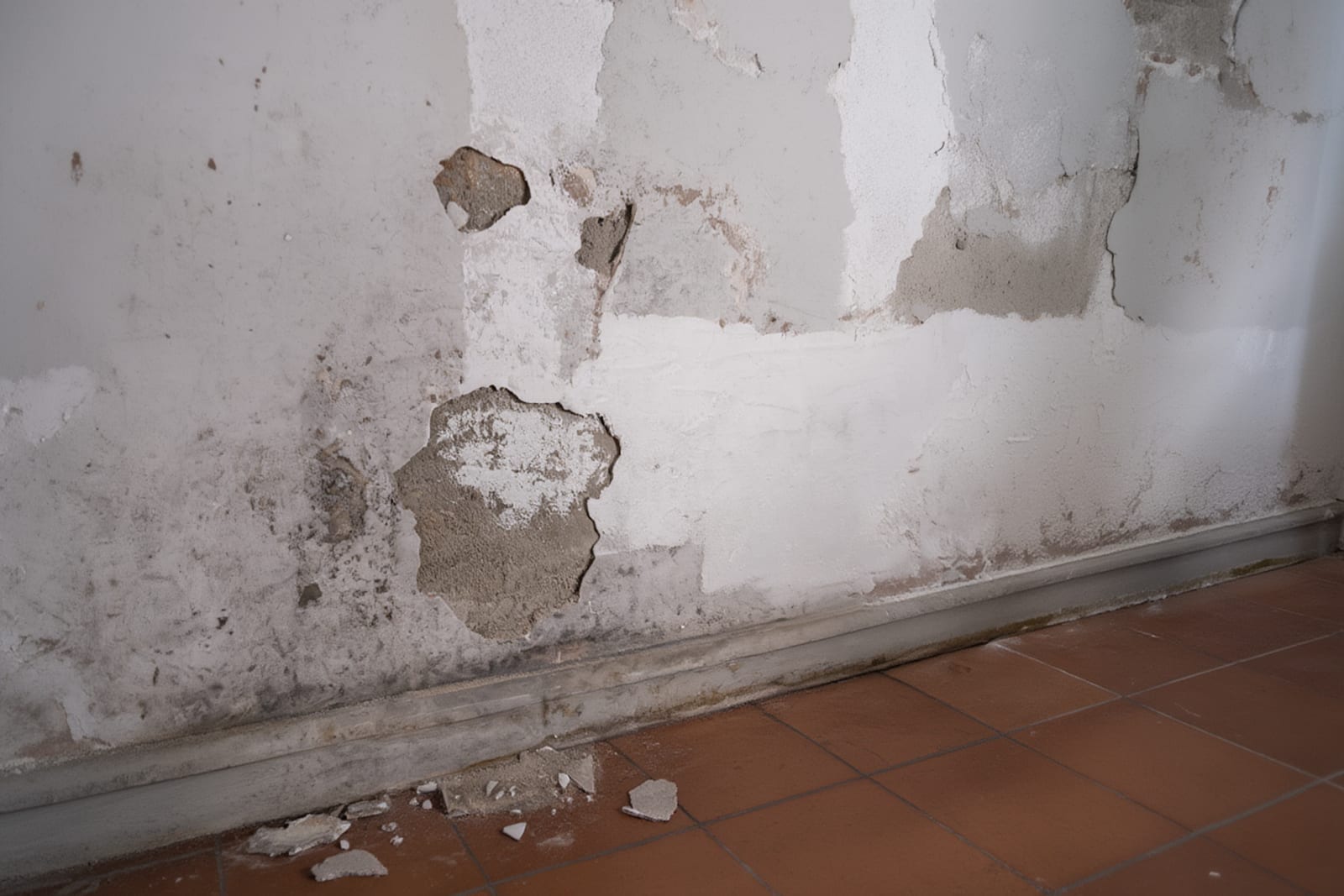
Peeling, Bubbling, or Flaking Paint
When moisture gets behind paint, it breaks the adhesion between the paint film and the surface. Look for isolated spots where paint is lifting, especially on exterior-facing walls and ceilings below bathrooms. In the photo you can see how moisture has pushed the paint layer away from the drywall, creating bubbles and flaking — a clear indicator of active or recent water intrusion behind this wall.
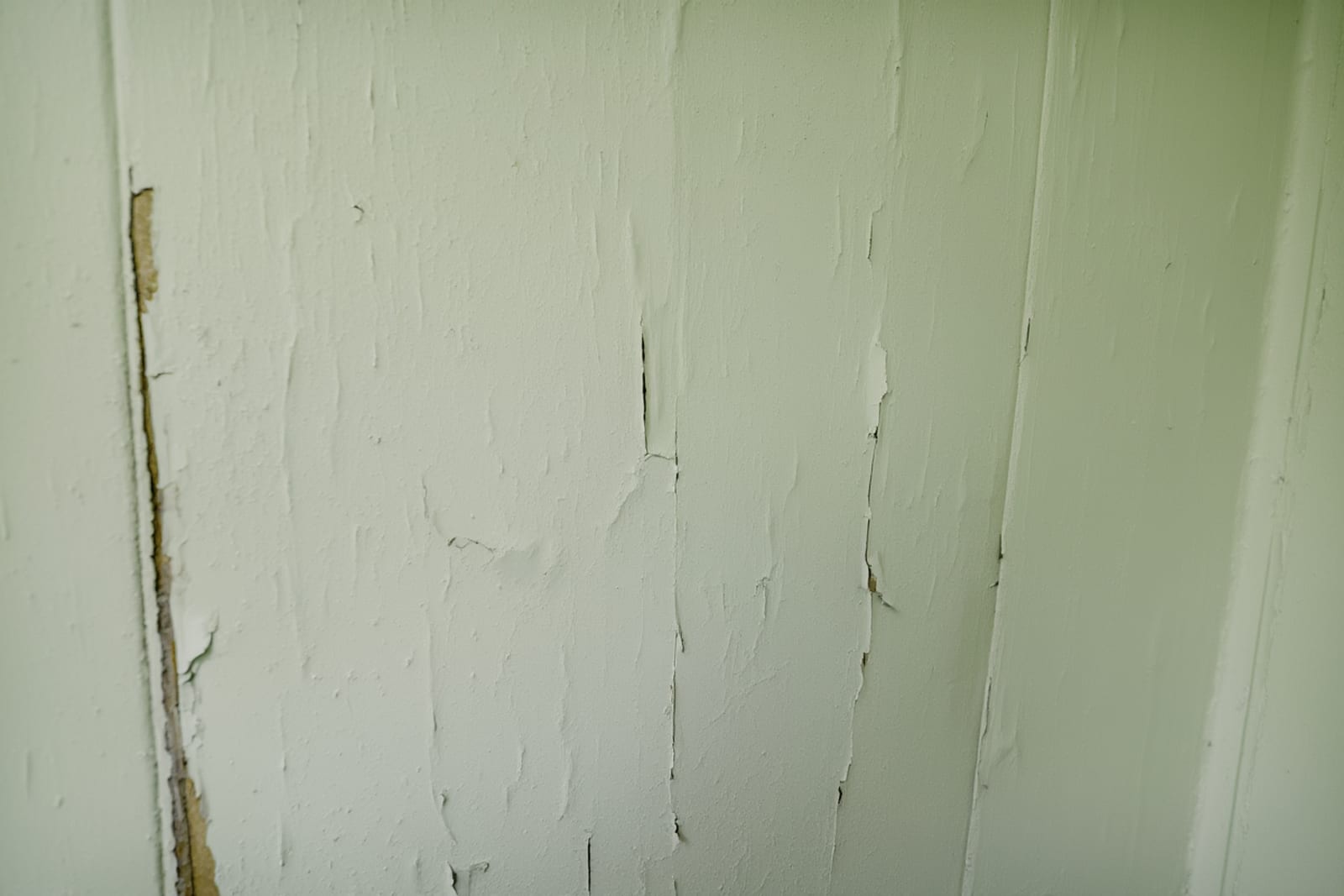
Warped or Buckled Walls
Drywall that has absorbed moisture will swell, creating a bowed or warped appearance. Press gently — saturated drywall feels soft and may give under light pressure. The distortion visible here is caused by the gypsum core expanding unevenly as it absorbs water, often from a slow leak behind the wall that has gone undetected.
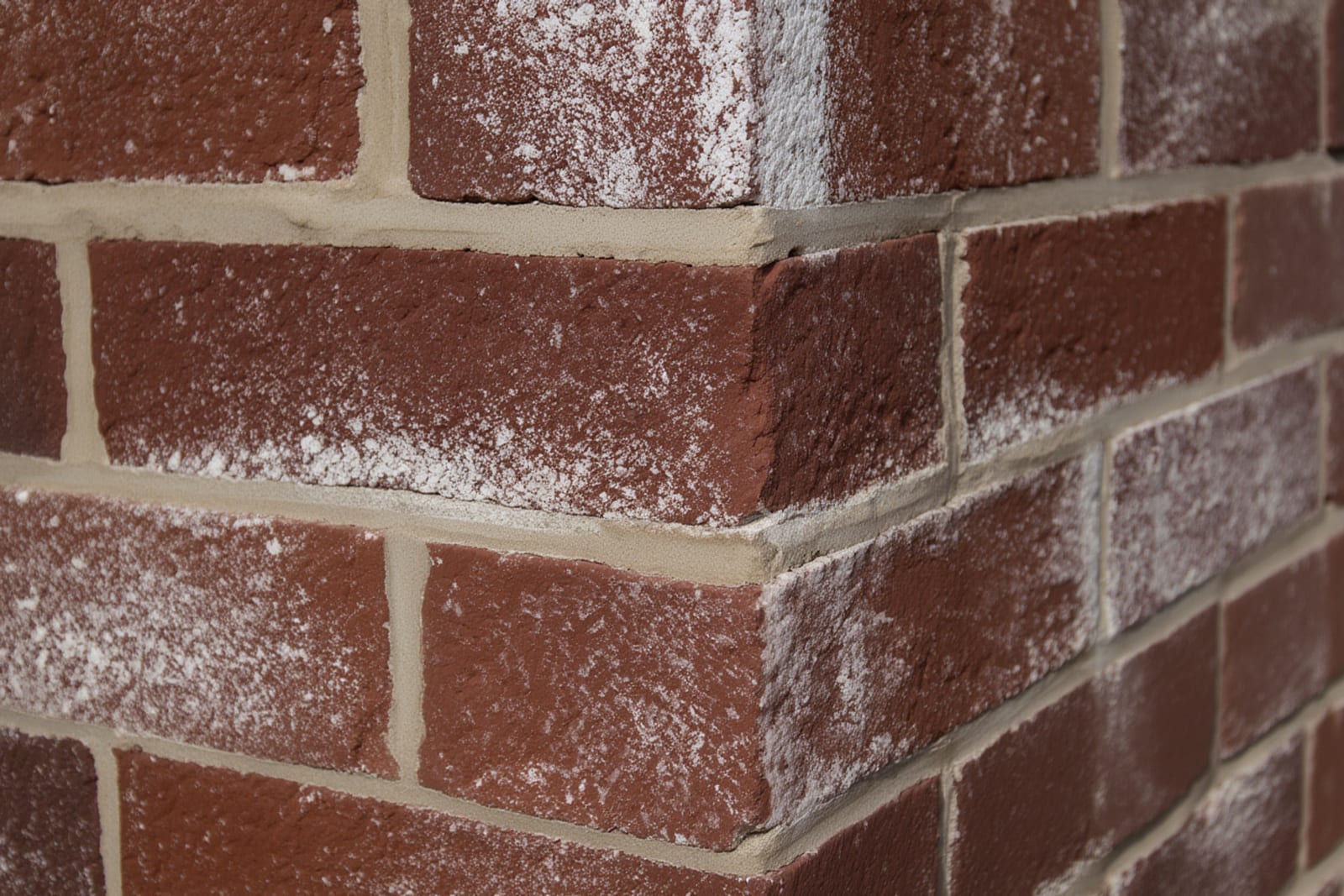
Efflorescence on Masonry
White, chalky deposits on concrete, brick, or block walls indicate moisture migrating through the material and depositing dissolved minerals on the surface. Common on Austin slab foundations and garage walls. This crystalline buildup is a reliable indicator that water is moving through the masonry — even when the surface appears dry.
Musty or Earthy Odor
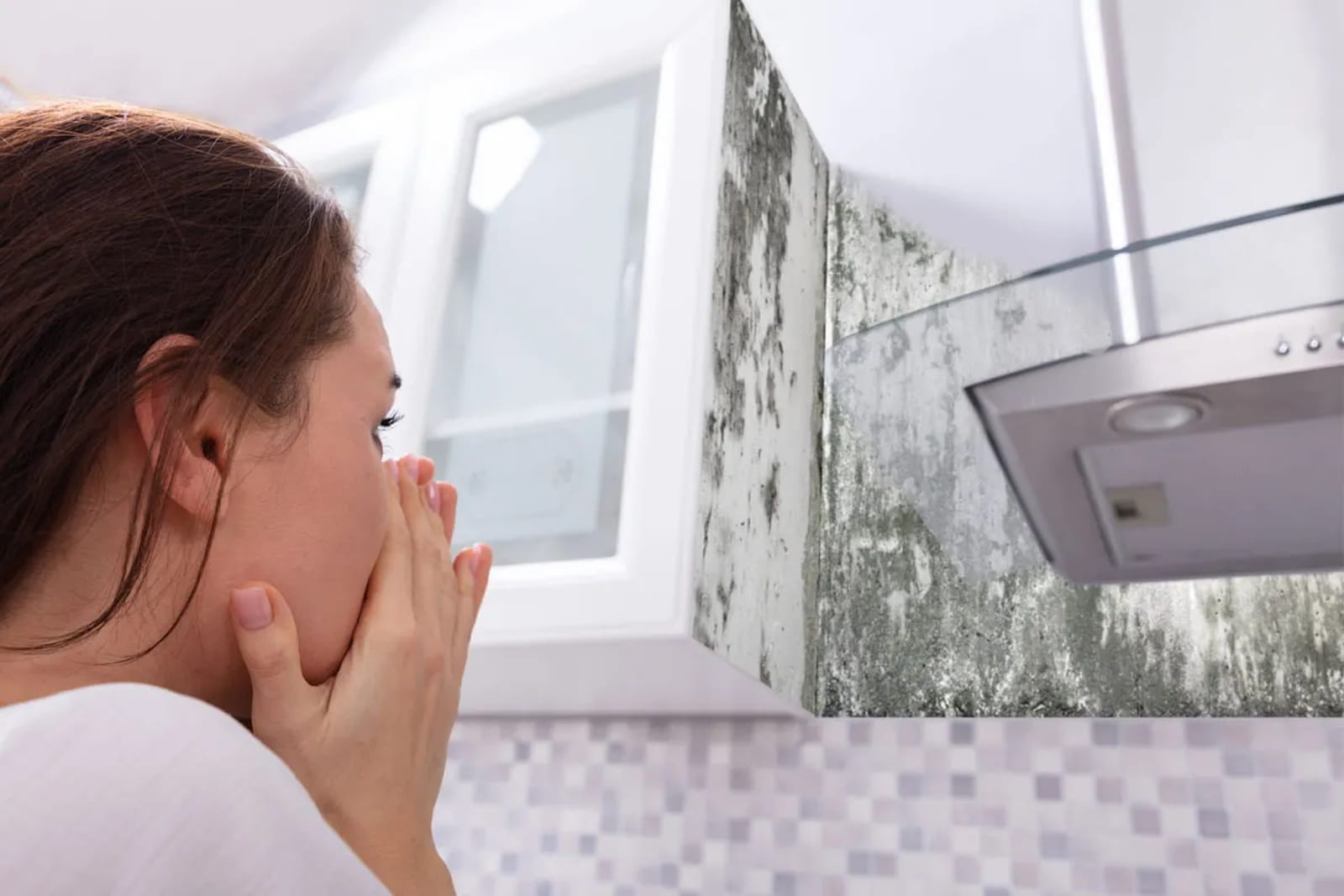
A persistent smell you cannot trace to a specific source often means hidden mold or stagnant water. If the odor is stronger in one area of the home, the moisture source is likely nearby. As shown here, the cause is often concealed behind finished surfaces — a professional moisture assessment can pinpoint the source without unnecessary demolition.
Visible Mold Growth
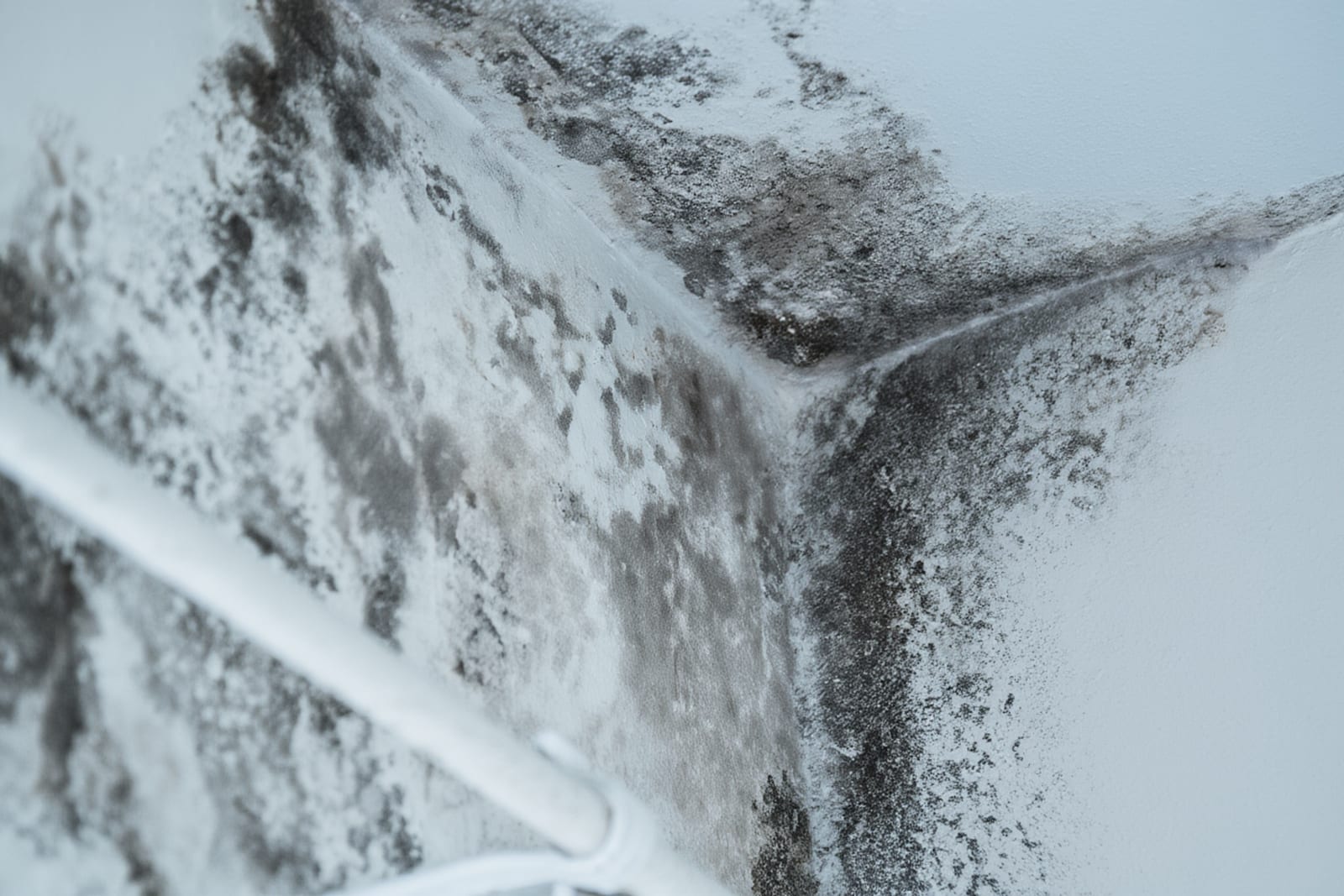
Dark spots, fuzzy patches, or discoloration on walls, ceilings, or around windows. Mold appears in many colors — black, green, grey, white, and even orange. Any visible mold means moisture is present and has been for at least 48-72 hours. Even a small patch like this can indicate a larger colony behind the surface — schedule a mold inspection promptly.

Unexplained Increase in Water Bill
A sudden spike in your water usage without a change in habits may indicate a plumbing leak inside the walls or under the slab. Compare your current bill to the same month last year. A steady increase over several billing cycles often points to a slow leak that is causing ongoing damage you cannot yet see.
Signs of Water Damage Inside Walls
Wall cavities are where water damage does its most expensive work — hidden from view, wicking through drywall, soaking insulation, and creating ideal conditions for mold colonization.
- Paint bubbling in isolated spots — A single bubble or cluster of bubbles on an otherwise solid wall usually means moisture is trapped behind the surface. This is different from widespread paint failure, which is typically a surface preparation issue.
- Baseboards pulling away from the wall — When the bottom of the wall absorbs moisture, the drywall swells and pushes the baseboard out. Look for gaps between the baseboard and the wall that were not there before.
- Soft spots when you press the wall — Healthy drywall feels solid and resists pressure. If a section gives when you press it with your thumb, the paper face or gypsum core has absorbed moisture.
- Staining at the base of walls — A dark line or discoloration running along the bottom 2-6 inches of a wall can indicate water wicking up from a slab foundation or from a leak in an adjacent room.
- Sound changes — Tap on the wall surface. Dry drywall sounds solid and consistent. A section that sounds hollow or different from the surrounding area may have damage behind it — the insulation has collapsed or the drywall has separated from the framing.
- Warm spots on interior walls — If a section of an interior wall feels warmer than the surrounding area, a hot water supply line behind the wall may be leaking. The warmth comes from hot water saturating the drywall and insulation.
Ceiling Water Damage Indicators
Ceiling water damage is usually caused by plumbing above (bathroom fixtures, HVAC drain pans, supply lines in the attic) or a roof leak. The signs are often visible before you notice wall damage.
- Brown or yellow rings — Circular or irregular stains on the ceiling are the most common indicator. The ring pattern forms as water spreads outward from the entry point and the edges dry first, depositing minerals.
- Sagging or drooping drywall — Ceiling drywall that appears to sag, bow, or pull away from the framing is holding water. This is a safety concern — a saturated ceiling can collapse without warning. Do not stand under a sagging ceiling.
- Cracking along tape joints — Moisture causes drywall tape joints to lose adhesion and crack. Look for new cracks that follow straight lines (tape joints) rather than random patterns (structural settling).
- Dripping or active moisture — Water dripping from a ceiling or light fixture is an obvious sign, but even persistent dampness or condensation on the ceiling surface in a specific area indicates an active water source above.
- Popcorn texture falling off — In older Austin homes with textured (popcorn) ceilings, water causes the texture to soften, discolor, and fall off in patches. The exposed area underneath often shows further staining.
Flooring Warning Signs
Flooring damage is often the first visible sign of a plumbing leak beneath the slab — common in Austin homes built on slab-on-grade foundations.
- Warped or cupped hardwood — Hardwood planks that cup (edges higher than center) or crown (center higher than edges) are responding to uneven moisture. Cupping means moisture is coming from below — typically the subfloor or slab.
- Buckling laminate or engineered flooring — Laminate that lifts at seams or develops ripples has absorbed moisture. Unlike hardwood, laminate cannot be refinished — it must be replaced.
- Soft or spongy spots — If the floor feels soft or gives way slightly when you walk on it, the subfloor has absorbed moisture and begun to break down. This is common near toilets, tubs, and dishwashers.
- Tile grout discoloration — Dark grout lines in specific areas (not uniformly dirty grout) can indicate moisture beneath the tile. The moisture wicks up through the grout, carrying dissolved minerals that darken it.
- Cracked or loose tiles — Moisture beneath tile can cause the thinset adhesive to fail, resulting in tiles that crack, pop up, or feel loose when stepped on.
- Carpet that stays damp — If a section of carpet feels damp without an obvious spill, moisture is coming from below — either a slab leak or a plumbing failure under the floor.
Signs of Mold Growth After Water Damage
Mold is the secondary damage that follows unresolved water intrusion. In Austin's warm, humid climate, mold can begin colonizing within 48 hours of a water event. These signs suggest mold may be developing:
- Visible dark spots on surfaces — Mold appears as dark spots, patches, or streaks on walls, ceilings, under sinks, and around windows. Colors vary: black, dark green, grey, white, and even pink or orange depending on species.
- Musty odor that persists — Mold produces microbial volatile organic compounds (MVOCs) that create a distinctive musty, earthy smell. If the odor persists after cleaning and ventilating, the mold source is likely hidden behind walls or under flooring.
- Allergic symptoms that worsen at home — Sneezing, congestion, eye irritation, or respiratory issues that improve when you leave the home and return when you come back may indicate elevated mold spore levels in the indoor air.
- Fuzzy growth on stored items — Check closets, under-sink cabinets, and storage areas near exterior walls. Mold often colonizes stored items (boxes, clothing, leather goods) before it is visible on structural surfaces.
- Recurring moisture on windows — Persistent condensation on window interiors, especially in one room, indicates elevated humidity levels that support mold growth. The moisture itself is not mold, but it signals conditions that allow mold to thrive.
Using a Moisture Meter: What Professionals Do
Visual inspection catches obvious damage. Professional moisture assessment finds what is hidden — and hidden moisture is what causes the most expensive problems down the line.
Professional moisture assessment involves two primary tools:
- Pin-type moisture meters — These insert small pins into the material to measure electrical resistance, which correlates to moisture content. They provide accurate readings at specific depths in wood framing, drywall, and other porous materials. A healthy drywall surface reads 0.5-1.0% moisture content. Anything above 1.0% indicates elevated moisture.
- Non-invasive (capacitance) meters — These scan surfaces without penetration, detecting moisture behind drywall, under tile, and inside wall cavities. They are used for rapid scanning of large areas to identify where deeper testing is needed.
- Thermal imaging cameras — Infrared cameras detect temperature differences on surfaces. Wet materials are cooler than dry materials due to evaporative cooling. A thermal scan reveals moisture patterns behind walls and under flooring that are completely invisible to the eye — often showing water migration paths far from the original source.
A proper moisture assessment creates a map of where moisture is present, how deep it has penetrated, and which materials are affected. This map determines the scope of the restoration process — what needs drying, what needs removal, and what is still sound.

When to Call a Professional vs. Monitor Yourself
Not every stain or odor requires a professional visit. Here is a practical decision guide:
| Monitor Yourself | Call a Professional |
|---|---|
| A single, small stain that is completely dry and old (no dampness, no odor) | A stain is growing, darkening, or appears damp |
| The stain is clearly from a resolved event (a previous repair that left cosmetic damage) | You smell a persistent musty odor you cannot trace |
| The area is well-ventilated and you see no signs of mold growth | Multiple signs appear together (staining + odor, or soft walls + peeling paint) |
| You see any visible mold — even a small area may indicate larger growth behind the surface | |
| Floors feel spongy or flooring is warping without an obvious cause | |
| You notice a sudden increase in your water bill | |
| Any active water event — standing water, dripping from ceiling, or running water sound without a source |
Early detection saves money. A small plumbing leak caught this week might cost a few hundred dollars to repair. That same leak left for three months can result in mold remediation, drywall replacement, and structural repairs costing thousands. If you are not sure whether what you are seeing is a problem, a professional moisture assessment can confirm or rule out active water damage quickly.
Frequently Asked Questions
Spotted Something That Concerns You?
A professional moisture assessment takes the guesswork out of water damage detection. We use moisture meters and thermal imaging to find what is hidden — and explain exactly what we find.
Serving Austin & Surrounding Communities
Our certified water damage restoration teams serve Austin and all major communities throughout the greater Austin metro area.