Water Damage Restoration Cost in Austin, TX — What to Expect and Why Prices Vary
The cost of water damage restoration depends on real variables — not a single number we can quote over the phone. This guide breaks down realistic price ranges for Austin homeowners, explains what drives costs up or down, and clarifies what your insurance is likely to cover.
If you are researching water damage restoration costs, you have probably seen wildly different numbers online. That is because water damage is not one thing — a small kitchen leak and a whole-home pipe burst are completely different projects. Here is what actually determines cost, with ranges based on Austin-area pricing.
Cost Ranges by Damage Type and Scope
These ranges reflect what Austin homeowners typically pay for residential water damage restoration. Your actual cost depends on the factors detailed in the next section.
| Damage Scenario | Typical Cost Range | What's Included |
|---|---|---|
| Small contained leak (one room, Category 1) | $1,200 – $3,000 | Extraction, 2-3 days drying, minor drywall repair |
| Moderate pipe burst (2-3 rooms, Category 1) | $3,000 – $7,500 | Full extraction, 3-5 days drying, drywall and flooring repair |
| Large loss (multiple rooms or whole-home) | $7,500 – $20,000+ | Extensive extraction, 5-7+ days drying, significant reconstruction |
| Sewage backup (Category 3) | $5,000 – $15,000+ | Contamination protocols, full porous material removal, HEPA filtration, reconstruction |
| Appliance leak with mold development | $4,000 – $12,000+ | Water damage restoration plus mold remediation, testing, clearance |
These numbers include mitigation (stopping damage and drying) and restoration (repairs). Some companies quote only mitigation, making their number look lower — but you still need repairs. Always ask whether a quote covers the full scope through to pre-loss condition.
Factors That Affect Total Cost
No two water damage events are identical. These are the variables that move your cost up or down:
- Category of water — Category 3 (sewage) costs significantly more than Category 1 (clean) due to safety protocols, mandatory material disposal, and specialized equipment. See the restoration process guide for how categories are determined.
- Square footage affected — More area means more extraction, more drying equipment, and more materials to repair or replace. A single bathroom versus an entire first floor can differ by thousands.
- Materials involved — Hardwood flooring costs more to restore or replace than carpet. Custom tile is more expensive than standard. Plaster walls require different techniques than drywall.
- Duration before discovery — A burst pipe caught in 20 minutes creates far less damage than one running for 8 hours while you are at work. Longer exposure means deeper saturation, more demolition, and higher cost.
- Accessibility — Water in an open living room is easier to extract than water behind kitchen cabinets, inside wall cavities, or under a slab foundation. Difficult access increases labor time and may require specialized equipment.
- Mold presence — If mold has already started growing (common when damage is discovered after 48+ hours), mold remediation adds a separate scope of work with its own costs.
- Austin-specific factors — Slab-on-grade foundations (common in Austin) can trap moisture beneath flooring in ways that pier-and-beam homes do not. Post-tension cable systems limit where we can drill for sub-slab drying. These Austin construction specifics can affect equipment needs and timeline.
Cost Breakdown: Extraction, Drying, Remediation, Repair
Understanding where the money goes helps you evaluate any assessment you receive. Here is a typical breakdown by phase:
- Water extraction — Typically 10-15% of total cost. Includes truck-mounted or portable extractors, weighted carpet extraction, and initial debris removal. Faster extraction reduces total drying time and overall cost.
- Demolition and material removal — 10-20% of total cost. Removing saturated drywall (usually cut 12-24 inches above the water line), carpet pad, damaged insulation, and unsalvageable contents. Disposal fees included.
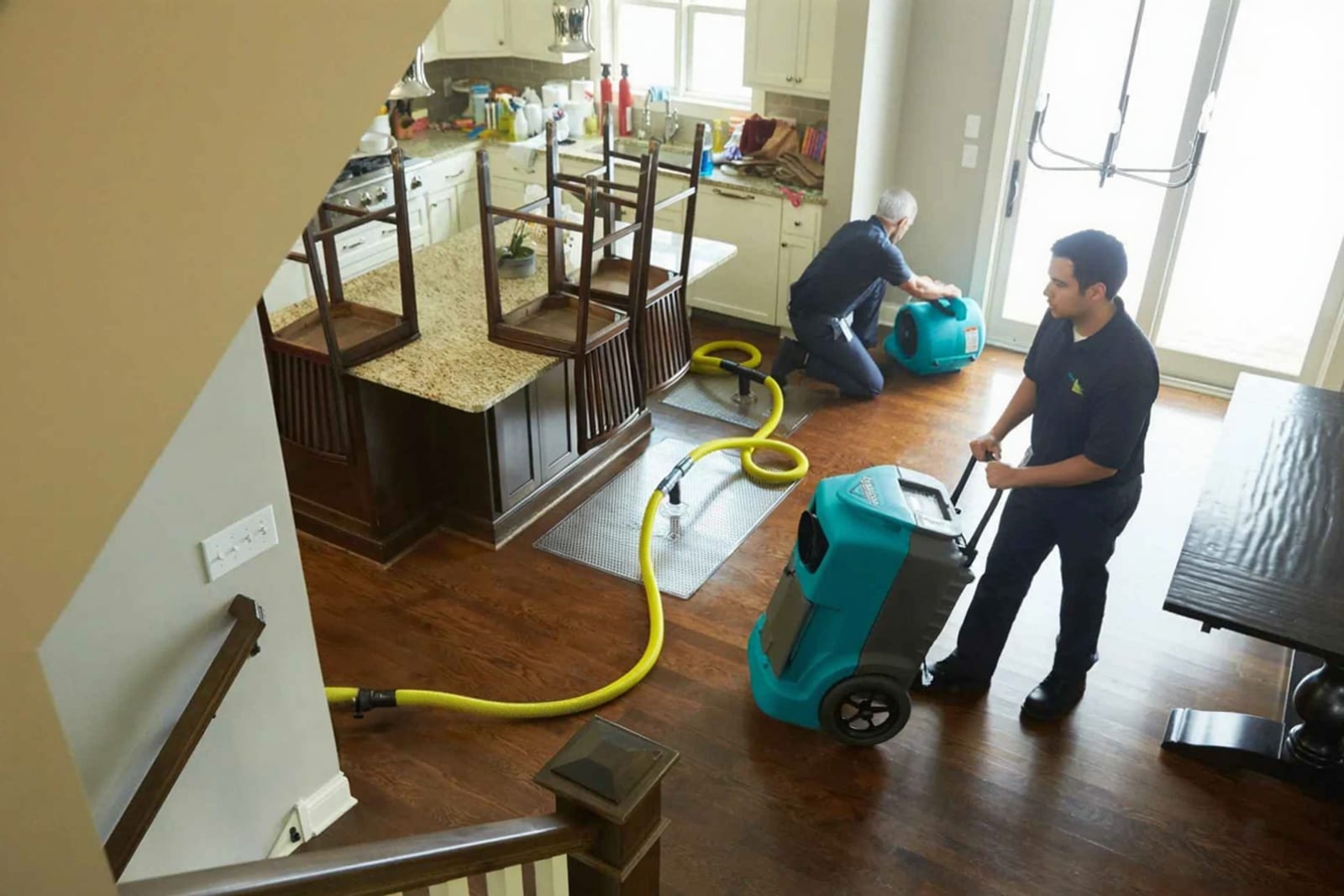
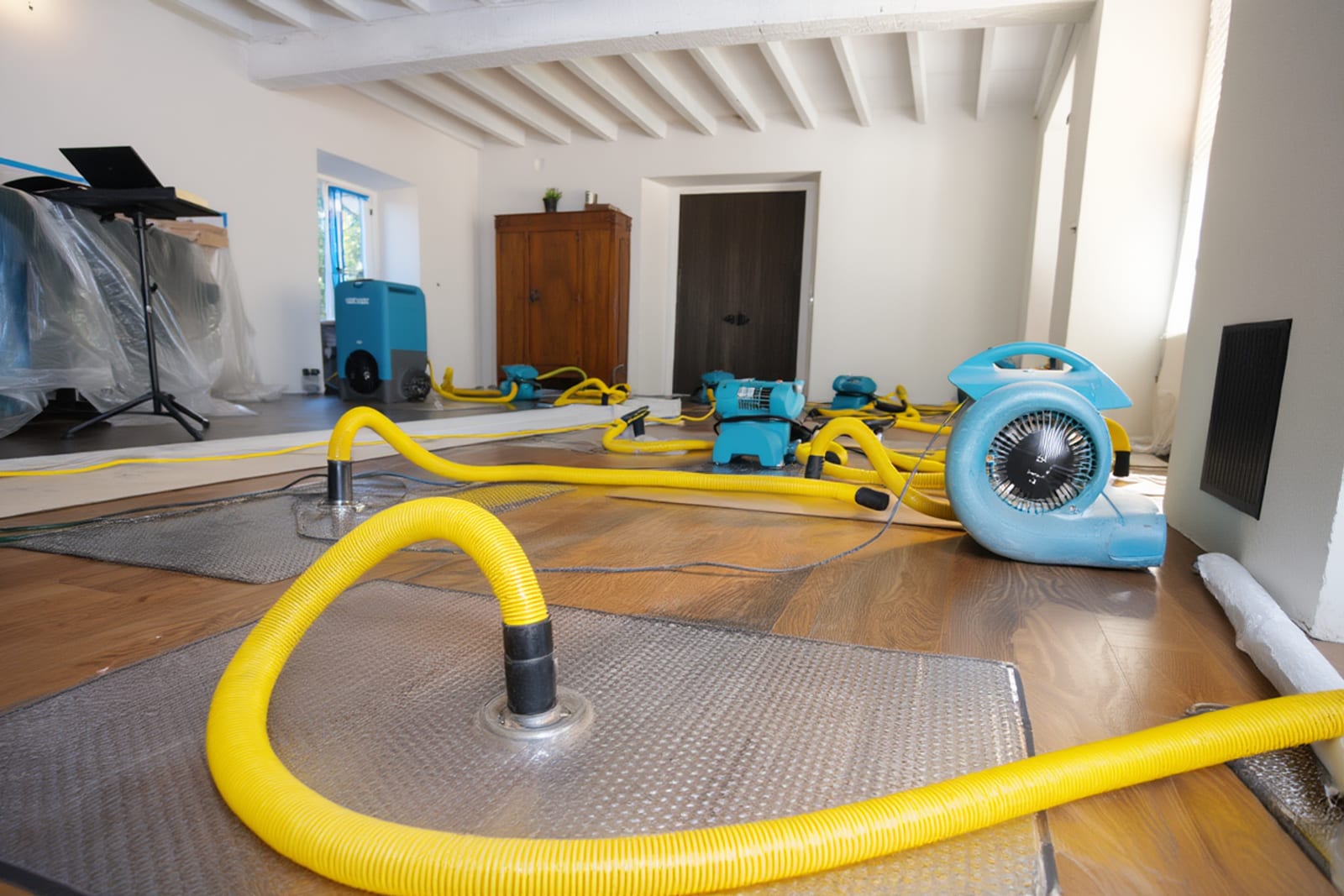
- Structural drying — 25-35% of total cost. This is the equipment-intensive phase — LGR dehumidifiers, air movers, injectidry systems, and daily monitoring. Equipment is typically priced per unit per day. A standard 3-room loss might require 4-6 air movers and 1-2 dehumidifiers running for 3-5 days.
- Cleaning and antimicrobial treatment — 5-10% of total cost. Antimicrobial application, HEPA air scrubbing, contents cleaning, and deodorization.
- Repairs and reconstruction — 30-40% of total cost. Drywall hanging and finishing, paint, flooring installation, trim, and any specialty repairs. This is where material choices (standard vs. premium) most affect cost.
Mold Remediation Cost in Austin
Mold remediation is a separate scope of work from water damage restoration, though they often overlap. If your water damage was not caught quickly — or if you are discovering damage that has been ongoing — mold may already be present.
- Small, contained mold (less than 10 sq ft in one area) — $1,500 to $3,500
- Moderate mold (10-100 sq ft, one to two rooms) — $3,500 to $7,000
- Extensive mold (multiple rooms, inside wall cavities) — $7,000 to $15,000+
These costs include containment, HEPA filtration, removal of affected materials, antimicrobial treatment, and post-remediation verification testing. Austin's warm, humid climate means mold can begin colonizing within 48 hours of a water event — one more reason rapid response matters for both health and cost.
Many Texas homeowner's insurance policies include a mold sub-limit — typically $5,000 to $10,000 — that is separate from your main water damage coverage. Check your policy declarations page for the specific amount. For more on insurance coverage, see our insurance claims guide.
What Your Homeowner's Insurance Covers
Most Texas homeowner's insurance policies cover sudden and accidental water damage. That includes:
- Burst pipes and failed plumbing connections
- Appliance failures (water heater, dishwasher, washing machine supply lines)
- Sudden toilet overflows and supply line failures
- Ice maker line failures
- Accidental discharge from HVAC systems
What is typically not covered:
- Gradual leaks from deferred maintenance (a slow drip you ignored for months)
- External flooding from storms, rivers, or ground saturation
- Sewer line backups (unless you purchased a separate endorsement)
- Mold that developed from a known, unaddressed moisture issue
The critical distinction is sudden vs. gradual. A supply line that snaps while you are at work is sudden. A toilet wax ring that has been seeping for six months is gradual. Insurance adjusters look for evidence of maintenance history when evaluating this distinction.
Your deductible applies to every claim. If your deductible is $2,500 and the restoration costs $6,000, your out-of-pocket is $2,500 and insurance covers $3,500. For smaller losses near your deductible amount, it may make sense to handle the cost directly rather than filing a claim that could affect your premium.
Getting an Accurate Assessment
An accurate cost assessment requires an on-site evaluation — not a phone quote. Here is what a proper assessment should include:
- Moisture mapping — Pin-type and non-invasive moisture meters used at multiple points to determine the actual extent of saturation, not just what is visible
- Thermal imaging — Infrared cameras reveal moisture behind walls and under flooring that visual inspection misses
- Water category determination — The source and contamination level directly affect cost and protocols
- Written scope of work — A line-item breakdown of what will be done, what equipment is needed, and the expected timeline
- Insurance-compatible documentation — Xactimate-format estimates that your adjuster can review and approve without re-doing the assessment
Be cautious of any company that quotes a firm price over the phone without seeing the damage. Water damage almost always extends beyond what is visible, and a phone quote is either a guess or a low-ball that will increase once work begins.
Frequently Asked Questions About Water Damage Costs
Need an Honest Assessment of Your Water Damage?
We provide a detailed, written scope of work before any restoration begins — no surprises, no hidden charges. Talk to a specialist about your specific situation.
Serving Austin & Surrounding Communities
Our certified water damage restoration teams serve Austin and all major communities throughout the greater Austin metro area.