Water Damage Insurance Claims — A Practical Guide for Austin Homeowners
Filing a water damage insurance claim does not have to be confusing. This guide explains what your Texas homeowner's policy typically covers, how to document damage properly, and how to work with your adjuster to get a fair outcome — written by a restoration company that handles insurance claims every week.
Most Austin homeowners have never filed a water damage claim before the day they need to. The process involves terminology, documentation requirements, and timelines that are not obvious. This guide gives you a clear picture of how water damage insurance works in Texas so you can make informed decisions from day one.
What Homeowner's Insurance Typically Covers (and Doesn't)
Texas homeowner's insurance policies generally follow the same structure: they cover sudden and accidental water damage while excluding gradual damage and external flooding.
| Typically Covered | Typically Not Covered |
|---|---|
| Burst pipes and failed plumbing — supply lines, drain lines, and connections that fail suddenly | Gradual leaks — a drip under the sink that has been going for months is a maintenance issue, not a covered peril |
| Water heater failures — tank ruptures, failed pressure relief valves, corroded connections | External flooding — requires separate flood insurance (NFIP or private) |
| Appliance malfunctions — washing machine hoses, dishwasher supply lines, refrigerator ice maker lines | Sewer line backups — not covered unless you purchased a specific endorsement (many Texas homeowners do not have this) |
| Toilet overflows and supply line breaks — sudden mechanical failures (not gradual wax ring seepage) | Mold from neglect — mold that grew because a known moisture problem was not addressed |
| Accidental HVAC discharge — condensate line failures, drain pan overflows | Deferred maintenance — roof leaks from aging shingles, deteriorated caulking, known plumbing issues you did not repair |
| Resulting damage to structure and contents — drywall, flooring, cabinets, personal property damaged by covered water |
The dividing line is almost always whether the damage was preventable through reasonable maintenance. If a 15-year-old water heater fails suddenly with no prior signs, that is covered. If it had been leaking visibly for weeks before it failed, your adjuster will question coverage.
Sudden vs. Gradual Damage: The Critical Distinction
This is the single most important concept in water damage insurance. The distinction between sudden and gradual damage determines whether your claim is approved or denied.
Sudden damage happens without warning and produces immediate, visible results:
- A supply line connection snaps while you are at work — you come home to standing water
- A washing machine hose bursts mid-cycle — water floods the laundry room in minutes
- A water heater tank ruptures — 40-50 gallons of water hit the floor at once
Gradual damage develops over time from an ongoing, unaddressed source:
- A slow drip behind a wall that creates mold growth over months
- A toilet wax ring that seeps small amounts of water with each flush
- A shower pan that has been leaking into the subfloor for years
The grey area — and where many claims are disputed — involves damage that was hidden but ongoing. A supply line inside a wall that has been slowly leaking for weeks, only discovered when the ceiling below shows a stain. In these cases, documentation of when you first noticed the problem and what you did immediately afterward becomes critical.
Documenting Damage: What Your Adjuster Needs
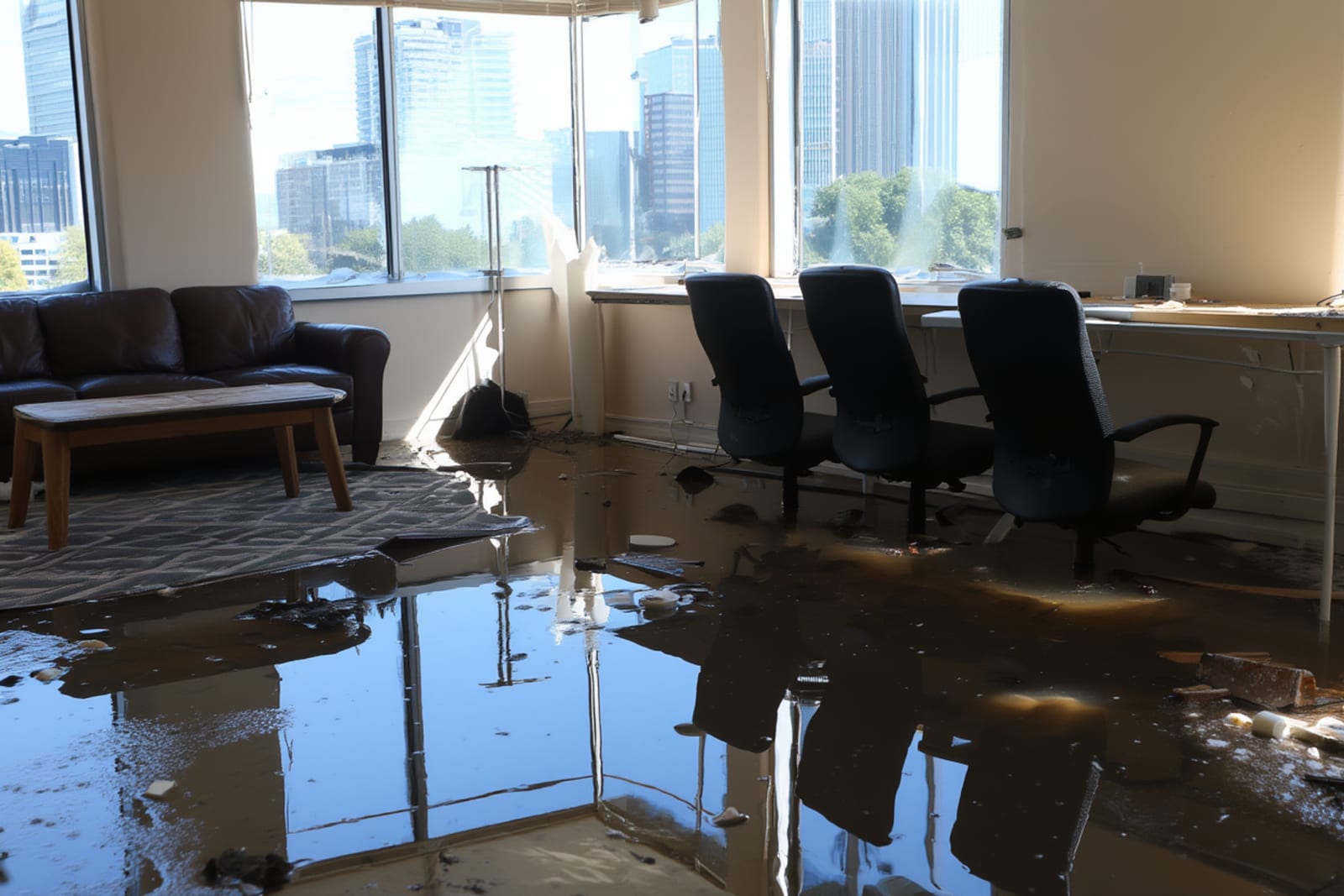
Thorough documentation is the foundation of a successful claim. Do this before you move anything or begin cleanup:
Wide-Angle Room Photos
Capture the full scope from doorways and corners of every affected room. Include unaffected areas for context.
Water Source Close-Ups
Photograph the broken pipe, failed appliance connection, or wherever the water is coming from. This establishes the cause.
Damaged Material Details
Saturated drywall, warped flooring, water lines on walls, damaged contents — close-up photos of every affected material.
Video Walkthrough
Walk through the affected area describing what you see. Mention when you discovered the damage and what the water source is. Your phone's timestamp metadata is valuable evidence.
Contents Inventory
List damaged items, approximate age, and estimated replacement value. Photograph individual items before disposing of anything.
Mitigation Receipts
If you had a plumber come to stop the water source, keep that receipt. It documents the cause and your prompt response.
This documentation serves two purposes: it supports your claim, and it protects you if there is a dispute about the scope or cause of damage months later.
How to File a Water Damage Claim in Texas
Filing promptly and correctly sets the tone for the entire claims process. Here is the step-by-step:
Stop the Water Source
Shut off the supply valve, turn off the main water, or have a plumber address the issue. Your policy requires you to take reasonable steps to prevent further damage.
Document Everything
Photos, video, written notes (see documentation section above). Do this before cleanup begins.
Call Your Insurance Company
Report the claim to your carrier's 24-hour claims line. Have your policy number ready. Describe the cause (not your theory of the cause — just what you observed) and the scope of visible damage.
Begin Emergency Mitigation
You do not need to wait for the adjuster to start cleanup. In fact, your policy requires you to mitigate further damage. Start extraction and drying. Keep all documentation of work performed.
Meet the Adjuster On-Site
The insurance company will send an adjuster (or a third-party inspector) to evaluate the damage. Be present for this inspection. Walk them through the damage and share your documentation.
Review the Scope of Work
The adjuster will produce an estimate. Review it carefully against the actual damage. If the scope misses affected areas or underestimates the work needed, respond in writing with supporting documentation.
Timeline note: Texas law (Insurance Code Chapter 542) requires your insurance company to acknowledge your claim within 15 days, accept or deny within 15 business days of receiving all requested documentation, and issue payment within 5 business days of acceptance. If your carrier misses these deadlines, they may owe you additional penalties.
Working With Your Insurance Adjuster
Your adjuster is not your adversary — but they are not your advocate either. They work for the insurance company to evaluate the damage and determine what the policy covers. Here is how to work with them effectively:
- Be present for the inspection — walk the adjuster through every affected area. Point out damage they might miss (inside cabinets, behind appliances, in closets).
- Share your documentation — provide your photos and video. If your restoration company has already performed a moisture assessment, share those readings.
- Do not speculate about the cause — describe what you found, not what you think happened. Let the evidence speak. "I came home and found standing water in the kitchen" is better than "I think the pipe has been leaking for a while."
- Get everything in writing — verbal agreements mean nothing in insurance. If the adjuster agrees to cover something, ask for it in the written scope.
- Review the Xactimate estimate line by line — check that the square footage matches reality, that all affected rooms are included, and that the scope covers full restoration to pre-loss condition.
When to Dispute a Claim Decision in Texas
If your claim is denied or the approved amount does not cover the actual damage, you have options. Disputes are common and do not have to be adversarial.
- Request the denial or reduction in writing — ask for the specific policy language the decision is based on. Review it against your policy.
- Submit a written appeal — provide additional documentation, moisture readings, photos, or a second professional assessment that supports a larger scope.
- Request a re-inspection — if the adjuster missed damage (common with hidden moisture in walls and under flooring), ask for a second on-site evaluation with additional evidence.
- Hire a public adjuster — a licensed public adjuster works for you (not the insurance company) to negotiate a fair settlement. They typically charge 10-15% of the claim amount. Worth considering for claims above $10,000 where there is a significant gap between your restoration company's scope and the carrier's approved amount.
- File a complaint with the Texas Department of Insurance — if you believe the carrier is acting in bad faith or violating Texas insurance regulations.
- Consult a policyholder attorney — for larger claims where the gap between actual damage and insurance approval is substantial.
How Restoration Companies Help With Claims
A qualified restoration company does not just dry your home — they produce the documentation that makes or breaks your insurance claim.
Moisture Mapping
Professional-grade moisture readings and thermal imaging that show the true extent of damage, including what is hidden behind walls and under floors.
Xactimate Estimates
Line-item estimates in the same software format your adjuster uses, eliminating back-and-forth translation.
Daily Drying Logs
Documented proof that the restoration process followed industry standards (IICRC S500).
Adjuster Coordination
Meeting your adjuster on-site, walking them through the damage, and providing professional documentation they can verify.
Supplement Filing
If the initial insurance estimate misses scope items, we file supplements with supporting evidence to get the full damage covered.
We work with all major insurance carriers operating in Texas. Our documentation is designed to meet adjuster standards from day one — which means fewer disputes, faster approvals, and less out-of-pocket expense for you. Understanding the typical cost ranges also helps you evaluate whether your adjuster's approved amount is reasonable.
Frequently Asked Questions About Water Damage Insurance
Need Help With Your Water Damage Insurance Claim?
We document to insurance standards from day one — moisture readings, photos, Xactimate estimates. Talk to a specialist who can walk you through your options.
Serving Austin & Surrounding Communities
Our certified water damage restoration teams serve Austin and all major communities throughout the greater Austin metro area.