Why Professional Water Extraction Matters
Hundreds of Gallons per Hour
Truck-mounted extractors outperform shop vacs by orders of magnitude — faster removal means less time for water to penetrate structural materials.
Hidden Moisture Detection
Thermal imaging and protimeter meters locate water inside walls, under slab flooring, and in ceiling cavities — areas invisible to the eye but active sources of mold growth.
Insurance Documentation
Moisture maps, moisture logs, and timestamped photos at every test point — the baseline your adjuster needs to process the claim without disputes.
Mold Prevention Window
Mold can begin developing within 24–72 hours of water exposure. Fast professional extraction is the single most effective action you can take to stay ahead of it.
Equipment We Use for Water Extraction
Truck-Mounted Extractor
Removes hundreds of gallons per hour through extended hose runs — primary tool for high-volume standing water events.
Submersible Pumps
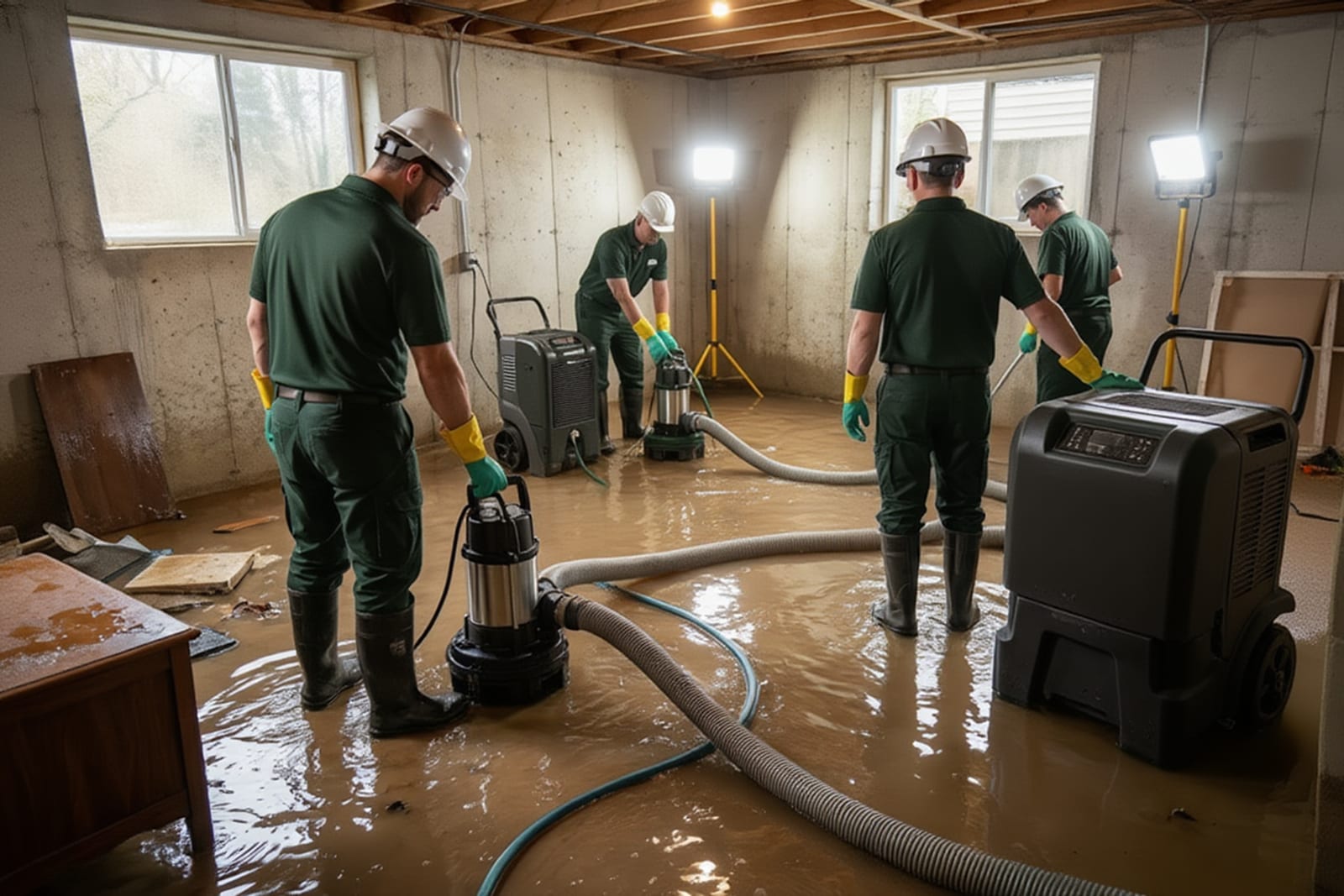
Deployed first for basements and rooms with several inches of standing water to bring volume down before extraction.
Weighted Extraction Tools
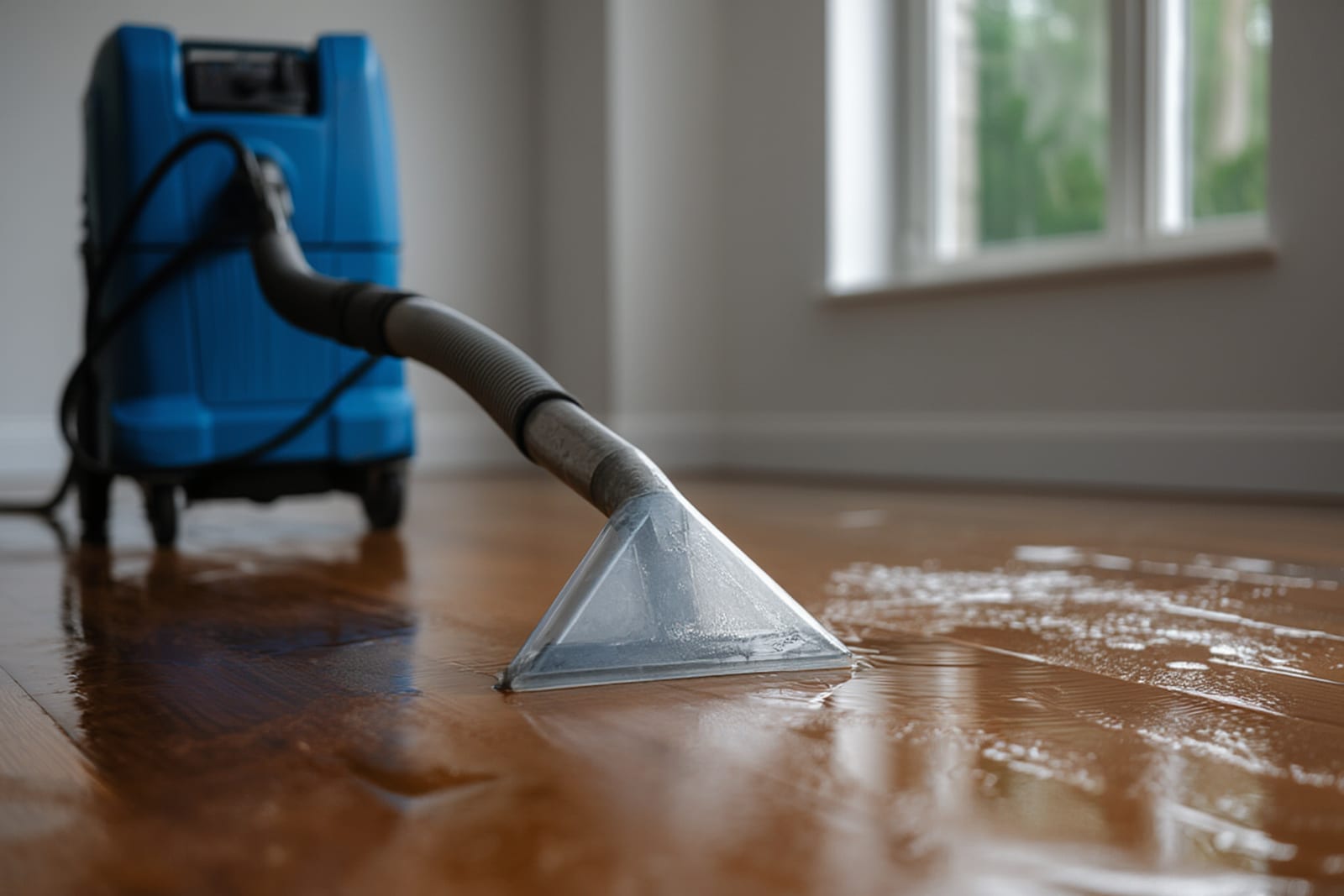
Press into carpet fibers under weight to pull absorbed water from saturated pad — more effective than open extraction.
Moisture Detection
Protimeter meters and thermal imaging cameras map water migration beyond visible areas — critical for slab foundations.
What Happens During an Extraction Call
Source Control
Identify and stop the water source before extraction begins. A pipe still flowing makes extraction ineffective.
Scope Assessment
Moisture meters and thermal imaging map where water has traveled — including areas not visible to the eye.
Standing Water Removal
Submersible pumps for deep water, truck-mounted extraction for the majority of removal. We work from perimeter inward.
Carpet & Pad Extraction
Weighted extraction tools applied to all wet carpet. Saturated pad is typically removed — it dries too slowly in place.
Documentation
Moisture readings at all test points, photos of affected materials, and an initial moisture map — baseline for your insurance claim.
Water in Your Austin Home? Get It Out Fast.
We dispatch 24/7 with truck-mounted extractors. Call now — every hour matters.
What Is Water Extraction?
Water extraction is the physical removal of water from your home — from standing water on hard floors, from water absorbed into carpet and pad, and from water that has migrated into wall cavities and subfloor materials. It is the first step in the water damage restoration process and the single most important factor in limiting secondary damage.
Speed matters enormously. Every hour water remains in contact with structural materials — drywall, wood framing, subfloor, insulation — increases saturation depth and extends drying time. A water event that appears minor can become a full structural drying project if not addressed within a few hours.
Professional Extraction vs. DIY
| Factor | Professional | DIY / Shop Vac |
|---|---|---|
| Removal rate | Hundreds of gallons/hour | Gallons/hour |
| Carpet pad | Weighted tools extract absorbed water | Surface only — pad stays wet |
| Hidden moisture | Thermal imaging detects wall/subfloor water | Not detected — mold risk |
| Insurance documentation | Moisture maps, moisture logs, photos | None |
| Mold risk reduction | Significant — faster extraction = less exposure time | Limited — water remains longer |
Water Extraction in Austin Homes
Austin's housing characteristics affect how extraction is approached, and our equipment and techniques are adapted for what we encounter in this market.
Slab foundations are nearly universal in Austin-area construction. When a slab-embedded supply line fails, water emerges from the floor and migrates laterally under flooring far beyond the visible wet zone. Extraction from slab events requires us to pull back flooring to access the water beneath — otherwise it sits against the concrete and wicks into surrounding materials for days. Thermal imaging is especially critical here because the migration path under tile or engineered flooring is invisible from above.
Engineered and hardwood flooring respond quickly to moisture. Cupping can begin within hours of exposure. Whether to attempt in-place drying with weighted mat systems versus removing sections for access depends on the flooring type, duration of exposure, and the water category. We assess each floor individually and explain the trade-offs before proceeding — this is not a decision that should be rushed. See our hardwood floor water damage page for specifics on floor salvage.
AC condensate line failures are a frequent source of ceiling and wall water events in Austin due to the extended cooling season. Systems run heavily from April through October, and a clogged or disconnected condensate drain can deposit water into ceiling cavities and wall spaces for days before it becomes visible below. These events often require extraction from above — accessing the attic space to remove saturated insulation and extract water from the HVAC drain pan area.
What Happens After Extraction
Extraction removes the bulk water, but your home is not dry when extraction ends. Materials that absorbed water — drywall, subfloor, wood framing, insulation — still hold significant moisture that will not evaporate on its own in a reasonable timeframe. The next phase is structural drying: commercial air movers and LGR dehumidifiers positioned to pull trapped moisture from building materials over 3 to 5 days, with daily monitoring to verify progress.
For more context on the full process that follows extraction, see how water damage restoration works. If mold is present or developing, see mold remediation. Understanding the typical costs for extraction and drying can also help you evaluate any estimate you receive.
Frequently Asked Questions
Water Extraction — Service Areas
We provide water extraction throughout the greater Austin metro area, including: Round Rock · Cedar Park · Georgetown · Pflugerville · Kyle · Buda · San Marcos · Leander · Lakeway. Contact us for service in your area.


